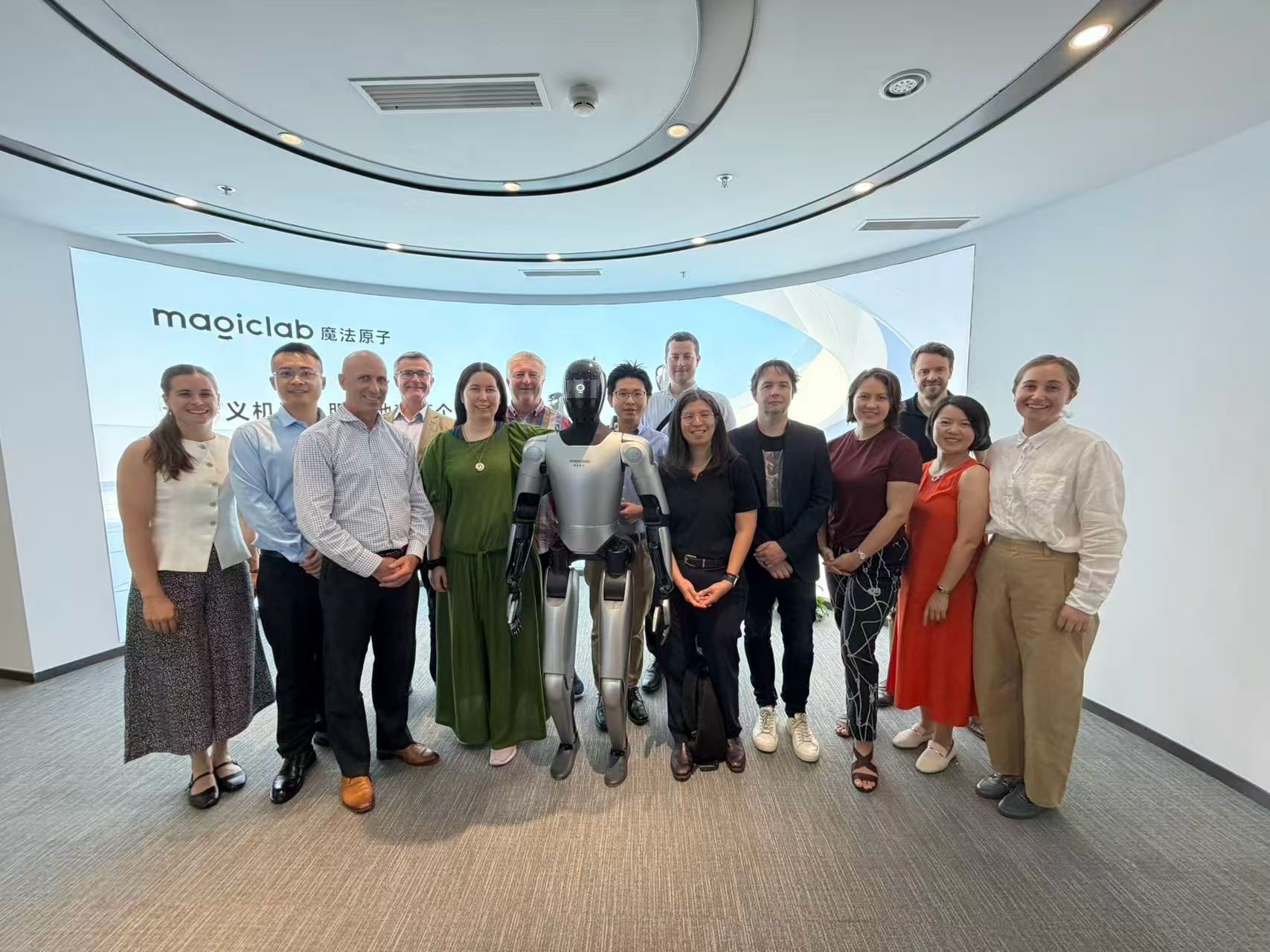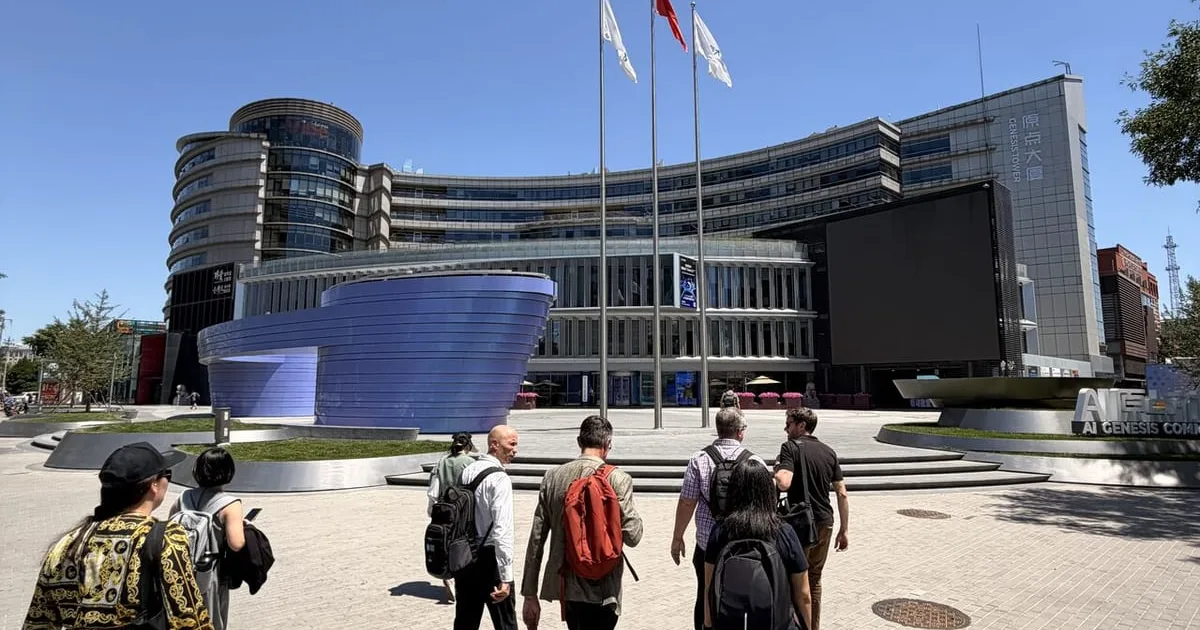
Day two of my AI delegation trip through China, and today was packed - agentic hospitals, banking, medical imaging and dinner with the NZ ambassador.
Tsinghua’s Agent Hospital
Tsinghua’s Agent Hospital showed off two use cases: AI patients for doctors to train against, and AI doctors for real patients.
They had GPT-4 hitting 90%+ on the US medical licensing exams. Put that next to the human learning cycle - a professional might see 30 cases a day - and the scale is staggering: an AI in a simulated environment can learn from over 30,000 cases.
Students and professionals can practise with AI patients, order scans, ask questions and run tests to sharpen their skills. Patients, meanwhile, can have a pre-consultation chat with an AI, which cuts down the admin and gets them triaged faster.
Lunch with Tsinghua’s AI governance team
Lunch was with Tsinghua University’s AI governance team. Even with one of the strongest STEM pipelines in the world, they admitted no one has education figured out in the age of AI.
Their approach now is to let students use any AI tool they want, and shift the assessment to explaining how and why they used it to solve the problem.
China Construction Bank
China Construction Bank has over 400 AI assistants running internally. What stood out was how top-down it all is - the Chinese five-year plan feeds down documents outlining how agentic AI and AI in banks should be developed, and everyone follows them.
There was also open collaboration between competitors - they knew exactly how many AI assistants had been deployed across the other major banks. Internally they run an open marketplace where staff build their own AI tools and share them out, on a feedback system: the tools that work well stick around, and the ones that aren’t well received die off.
Beijing Anzhen Hospital
Beijing Anzhen Hospital serves 5 million patients a year. Their big AI push is imaging, where they’ve cut analysis time by 80%. On top of that they have contactless check-ins, x-ray results and a self-operated 24/7 smart pharmacy - scan a code and get your medicine.
We finished with dinner with the NZ ambassador, a great way to wind up such a packed day. If the rest of the delegation trip is like this, my brain will be fried.
This is part of my AI in China series. Previously: Day 1 - AI Is Literally Everywhere. Next up: Day 3 - Humanoid Robots, Open-Source Coding and Voice-Controlled Cars.