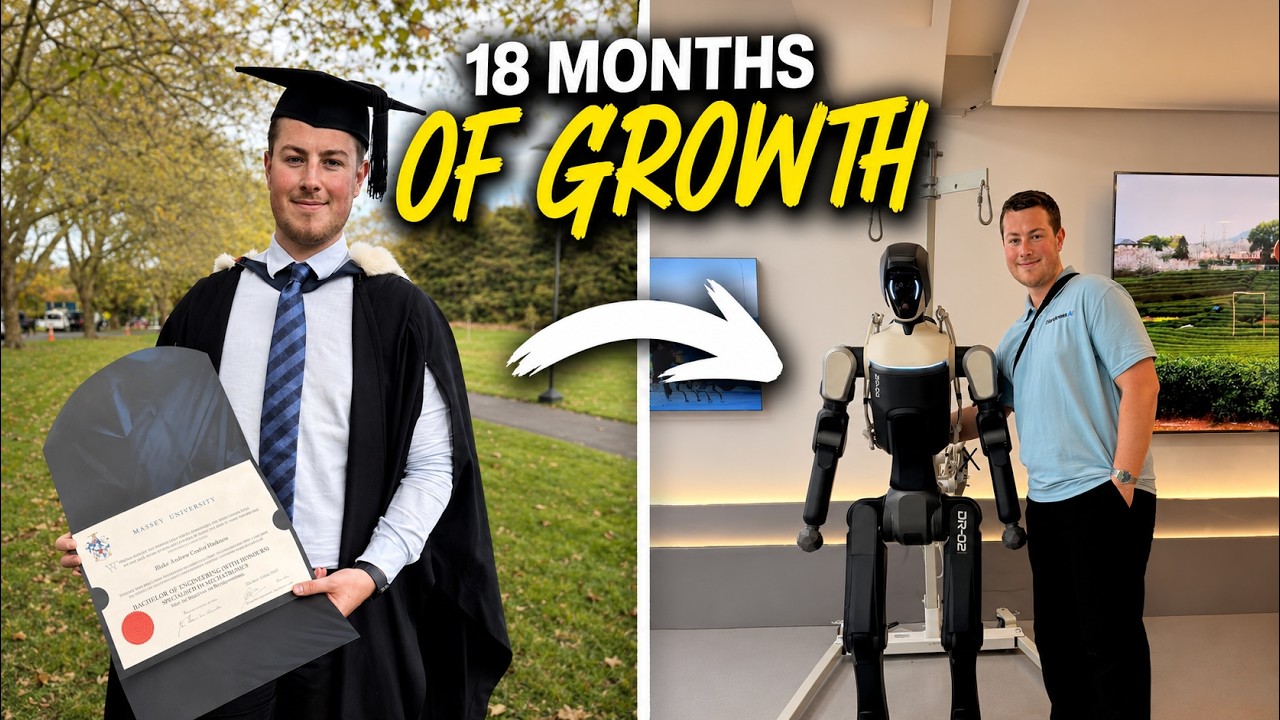
I spent 7 days in China with a New Zealand AI delegation, going behind the scenes inside their leading robotics and AI companies. I had absolutely no idea what to expect, but I came home blown away by two distinct things: how deeply AI is already woven into everyday life over there, and how far ahead they are in robotics. Here’s what I actually saw on the ground.
AI is woven into everyday life
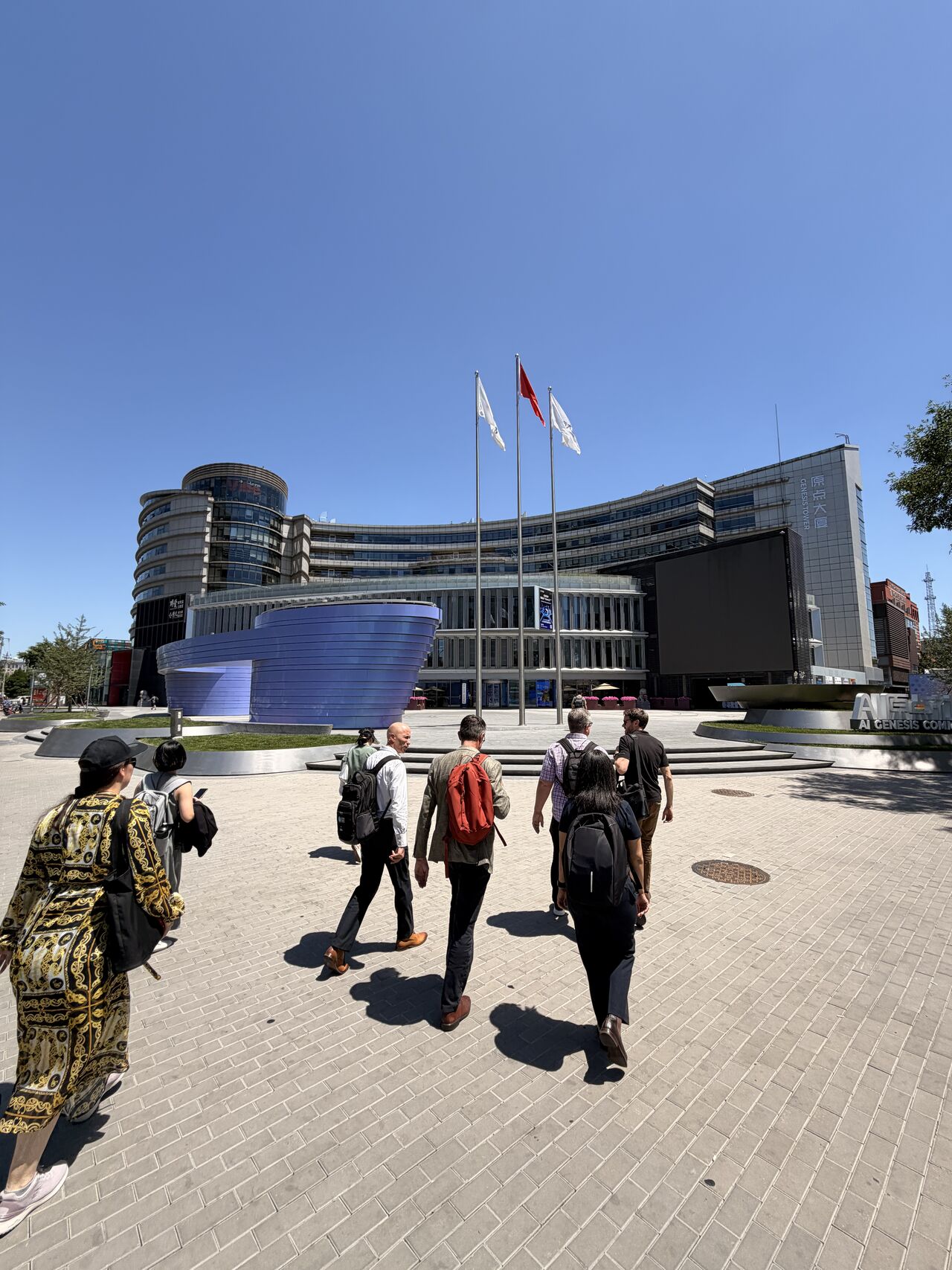
Straight off the plane, a giant AI and Olympics banner sat in the middle of the terminal, and it didn’t stop there. Driving to the hotel, building after building had the letters “AI” standing out amongst the Chinese characters. On our first day we visited the Summer Palace, a stunning historic location. Then you turn a corner and a robot is taking your drink order. You scan a QR code, pay through Alipay, and the robot grabs your drink and hands it to you.
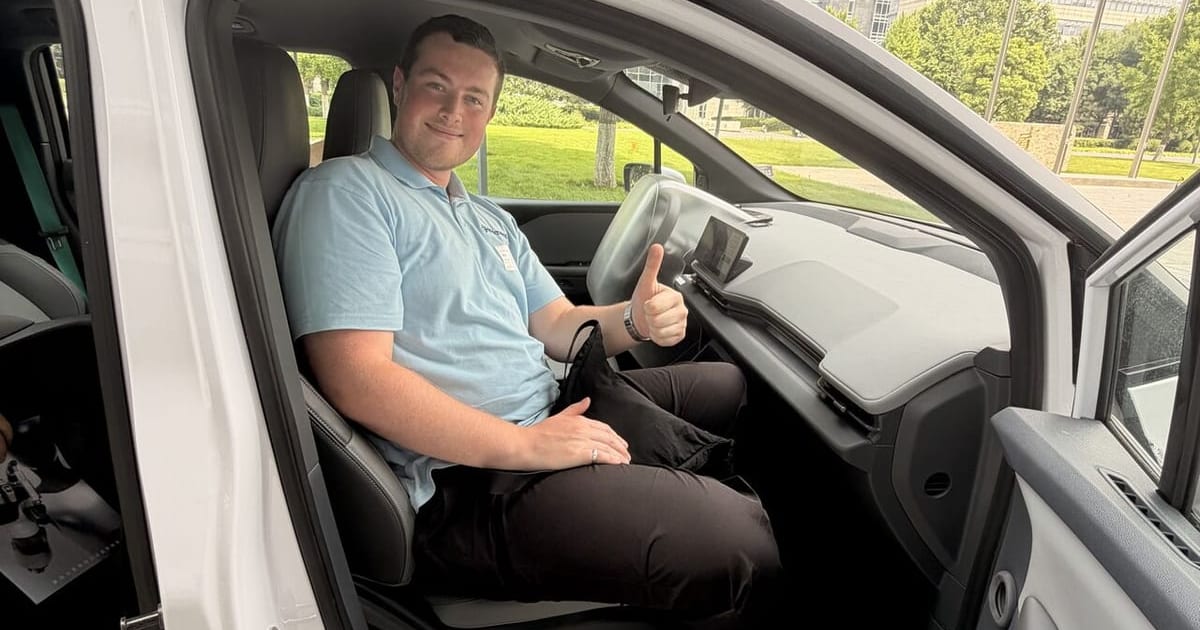
Every hotel room we stayed in had a voice assistant running the TV, air conditioning, blinds and lights, like a supercharged Siri. I was bracing for smog in Beijing, but instead there were EVs as far as the eye could see and barely any smog at all. And they aren’t basic EVs. Some are fully autonomous cars you control just by talking to them. Ask for a seat massage or a change of direction and it happens automatically.
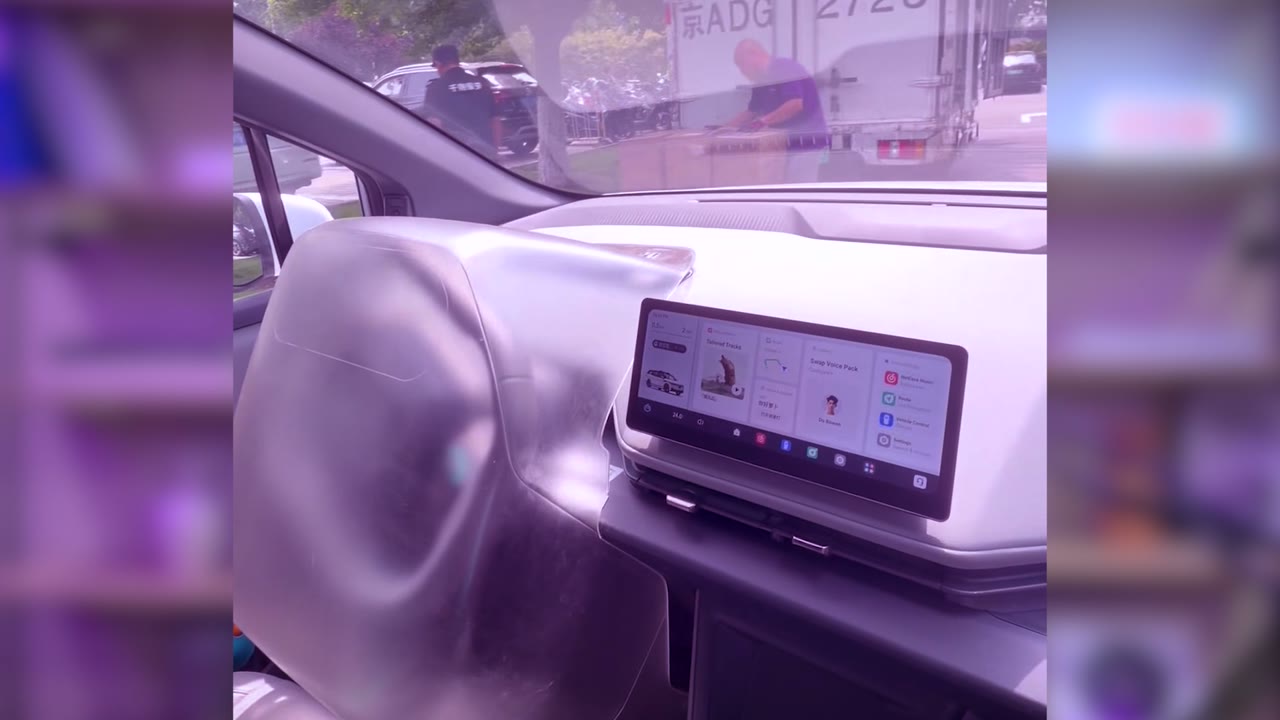
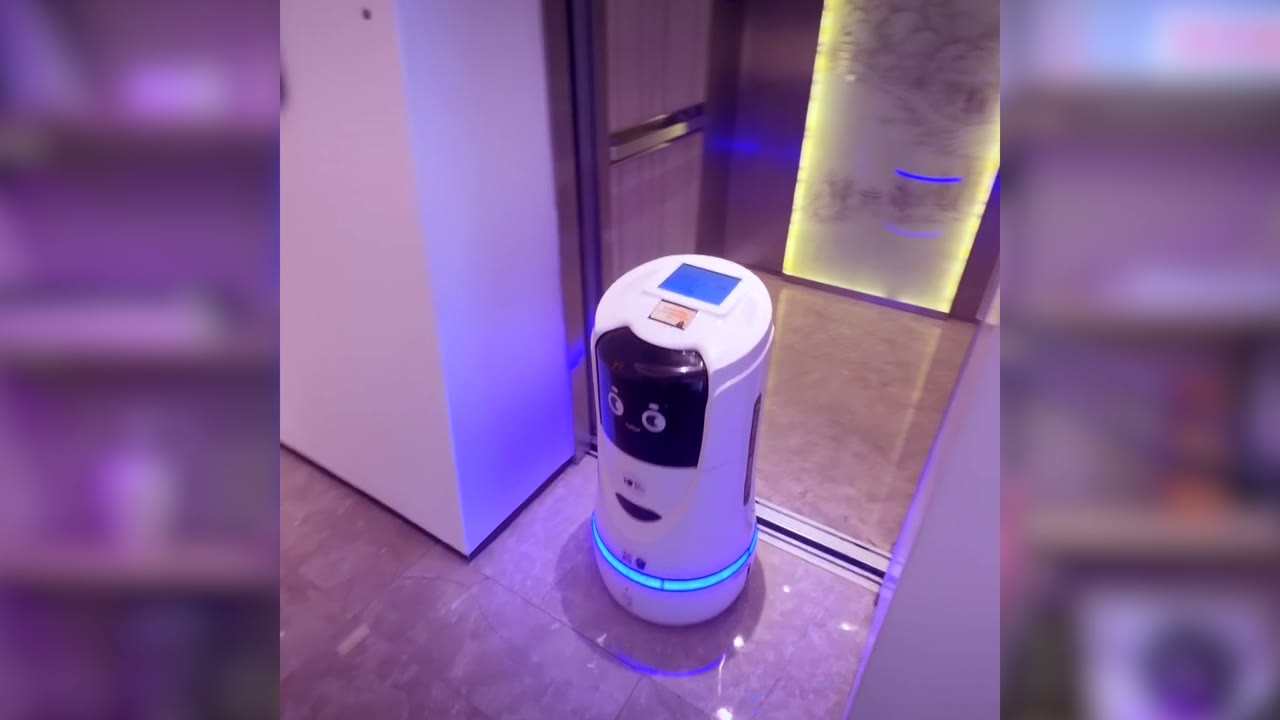
The one that really surprised me was food delivery. The driver doesn’t come to your hotel room. They drop the order into a robot in the lobby. That robot is connected to the hotel systems, rides the lift to your floor and brings it to your door completely autonomously. That’s the takeaway: AI over there isn’t a separate chatbot you visit. It’s an integrated system running through every part of day-to-day life.
Robots are brilliant in narrow settings
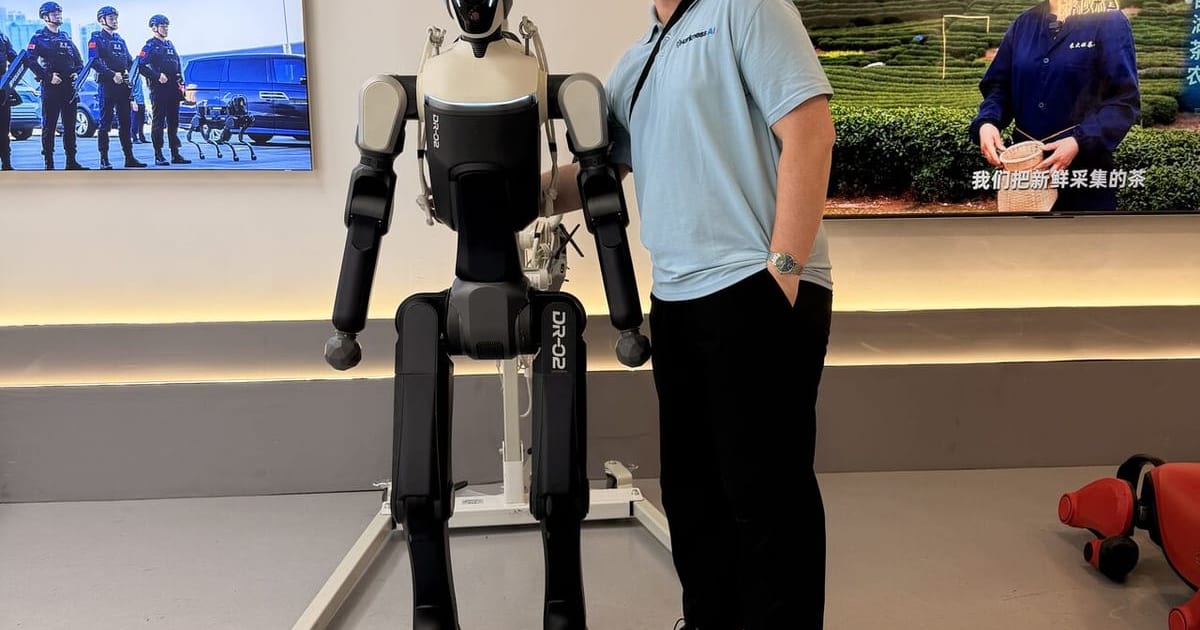
We met a huge number of robotics companies, including Unitree, Galbot and MagicLab, and the message was basically the same at every one. These robots are genuinely brilliant in narrow, specific settings: moving parts and boxes on a manufacturing line, picking medication in a pharmacy. Galbot even had a humanoid serving coffee and food inside a Family Mart. The one everyone sees online is the dancing humanoid, which is a bit gimmicky, although keeping a two-legged robot balanced like that is genuinely hard engineering.

We see these humanoids and assume we’re one step from Terminator walking down the street, but we’re quite far from that reality. The hardest problem right now isn’t the robot body. It’s the data. Specifically, closing the gap between simulation and the messy real world we actually live in. Everyone is approaching it differently: one company is building a world model with NVIDIA behind them, others are paying people to record themselves doing everyday tasks at home with a camera strapped to their head. In the States, people are getting free house cleaning if the cleaners can wear a full body tracking suit covered in cameras.
Real-world data is the most valuable thing in robotics right now, and that’s exactly where New Zealand has an edge. We can’t out-build their factories or outdo their frontier models, but we have unique data in agriculture. That’s the data they can’t just buy, so that’s the level where we can compete.
Why they move so fast
A big part is national direction. China’s new five-year plan for 2026-2030 mentions AI more than 50 times - the last one mentioned it about six. It comes with a dedicated “AI plus” push to drive AI into every industry, targets like 90% adoption across key sectors by 2030, and the openly stated goal of being the world leader in AI by then. You feel that direction in every company. Even competing banks openly knew exactly how many AI assistants each other had deployed.
At the China Construction Bank, they’ve rolled out over 400 AI agents internally. Staff build their own agents and automations and put them on an internal marketplace. If colleagues start using yours, it spreads fast; if no one does, it quietly dies off. It’s almost natural selection for AI tools.
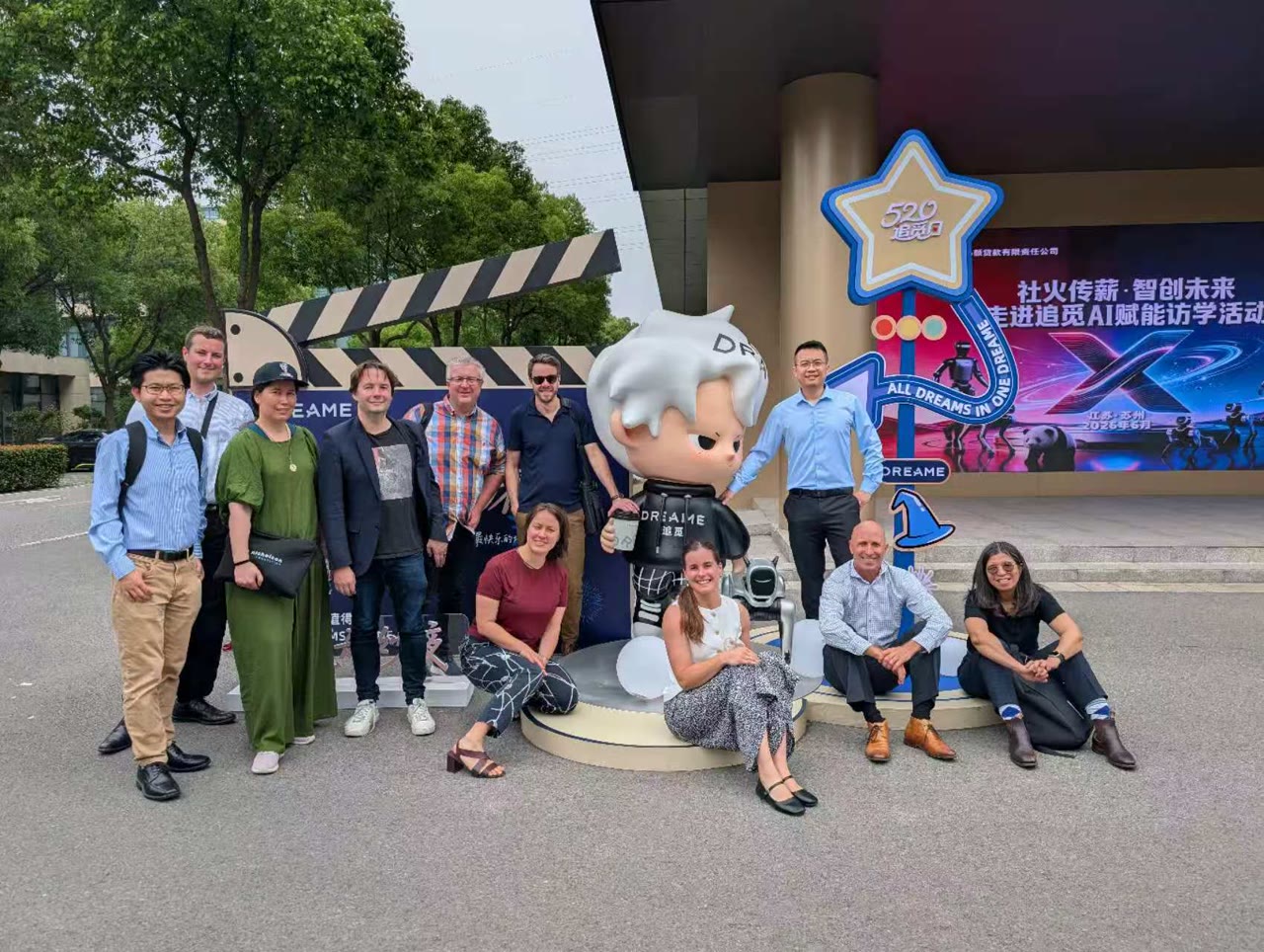
Then there are manufacturers like Dreame. China’s old advantage was manufacturing. The new advantage is iteration speed. Because building is so cheap and fast, they can test, fail and rebuild quicker than anyone. Over 200 businesses run under Dreame’s ecosystem: a fridge that adjusts to the vegetables inside, a stair-climbing vacuum cleaner, a tap that pours the exact amount on command. The mechanism behind that speed is brutal: in some areas two internal teams compete on the same product, and if a team misses targets, it’s gone. You don’t have to admire that to learn from it: whoever shortens the build, test, rebuild loop wins. We’re cautious by nature in New Zealand, which is great for safety but costly for learning. We need to shorten our loops.
The software layer is going somewhere different
Not everything was robotics. Some of the bigger surprises came from software companies, because they broke the assumptions we walked in with. Take Z.AI: their base model GLM hit state-of-the-art for open-source coding, so I expected a data-hungry pitch. Instead, much of the conversation was about sovereign AI, helping other countries set up the talent, data and computing power to run AI on their own soil, with information staying completely local. That’s the opposite of the Western assumption that Chinese AI is all about siphoning your data.
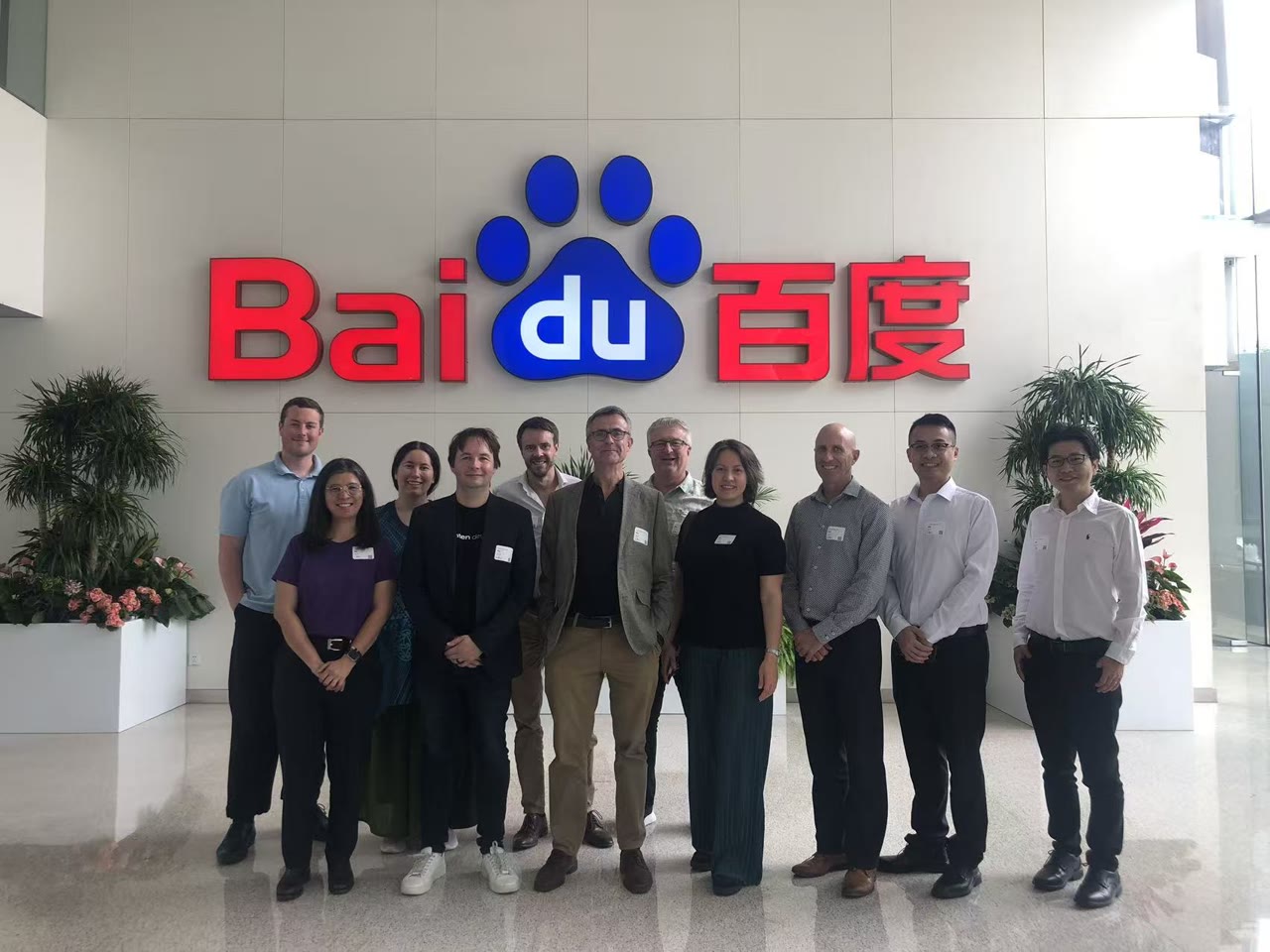
Then Baidu. They’ve built their own version of Lovable called MeDo, where people build AI tools and sell them on a marketplace, packaged straight into the app store with an enterprise version for companies. They also run AI-generated live shopping influencers, and even when the stream openly says the host is AI generated, they get the same number of sales, and on some products even more. The software layer over there isn’t just catching up; it’s going somewhere genuinely different from the story we tell ourselves in the West.

Healthcare at a scale that’s hard to picture
At a university, one company had built AI agents to train healthcare professionals. They have millions of simulated patients across every age, body type and set of symptoms. As a trainee you work the case: order the lab tests, get the results back, ask the questions, work towards a diagnosis. Think about the leverage there. A doctor might see 30 real cases in a day; in simulation they can train on hundreds of thousands of unique ones, including rare cases they’d almost never encounter day-to-day. The models they use already hit 90%+ on US medical licensing exams.
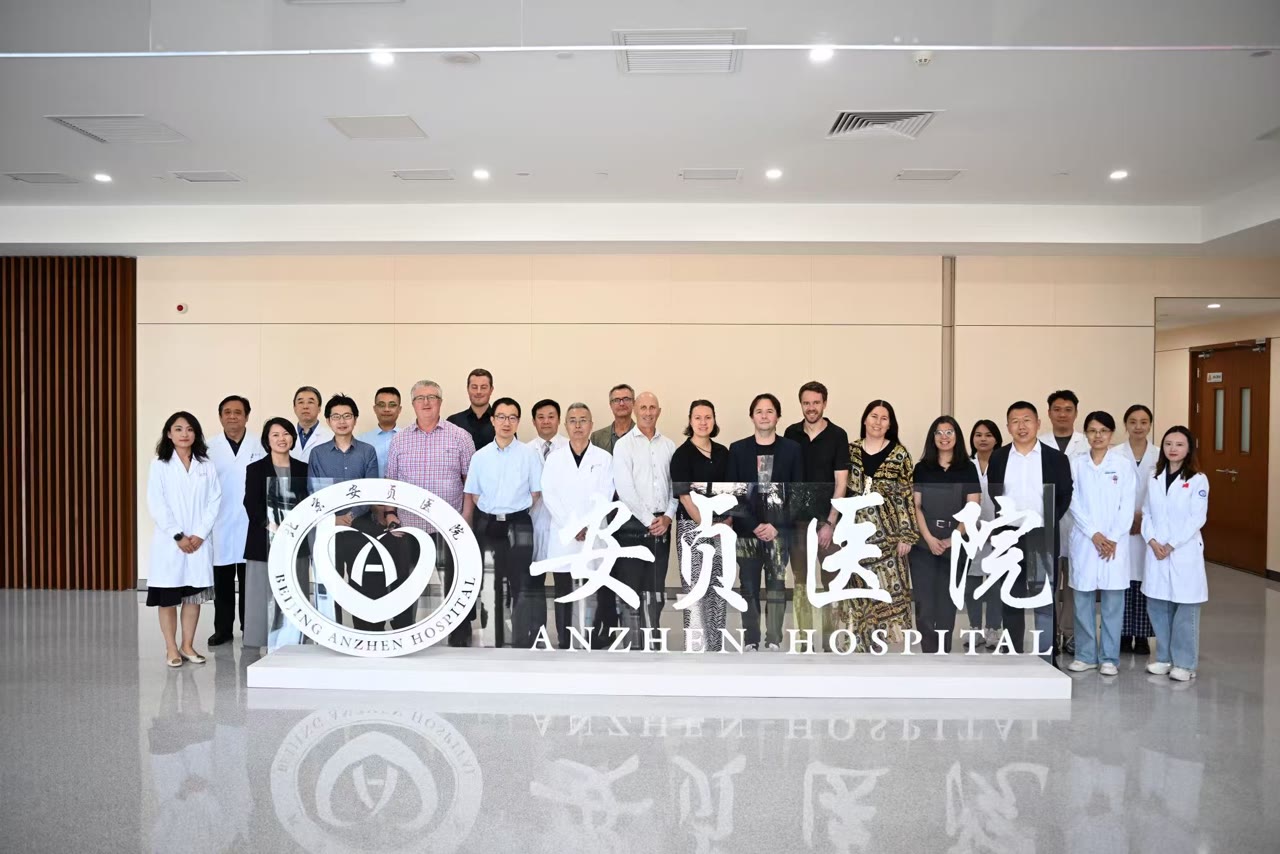
The same idea flips around for triage: a real patient talks to an AI agent that does the first assessment before they see a doctor. At the hospital we visited, we saw it live. It’s almost entirely contactless. You speak to an AI agent, get a QR code on your phone, then wait for your MRI or X-ray. AI has reduced the time a doctor takes to interpret those scans by 80%. The pharmacy at the end is fully autonomous: scan your QR code and, like an Amazon warehouse, a robot picks your medication and hands it over in one smooth flow. That one hospital serves around 5 million patients every year, basically the population of New Zealand through a single hospital.
Smart cities: the boring work moves the needle
The smart city side was fascinating as an engineer. At the Hangzhou operation centre, AI was publicly available to help draft legal documents and answer council questions. Hard hats with fall detection built in, cameras watching over lone workers on sites, and algorithms optimising traffic lights to cut congestion across the city. It was the boring infrastructure work that actually moved the needle for everyday citizens.

Keep humans in the loop
For all that automation, the clearest lesson was almost the opposite. Take Alibaba. The scale alone is hard to fathom, with 2 billion model downloads this year and 250,000 models built on top of Qwen. But the lesson they talked about was a failure. They tried to generate fashion designs end-to-end with AI, and it didn’t work: the designs were soulless, and the designers had no idea how the AI produced them, so nobody trusted it. So they rebuilt it. Now AI does the market intelligence and trend analysis, and that gets fed to the human designer instead of replacing them. Across the whole trip, the failures came from removing human judgment, not from too little AI.

The next generation
That leads to the thing I care about most. We had lunch with professors from Tsinghua University’s AI team, one of the strongest talent pipelines on the planet, and they openly admitted no one has education figured out for the age of AI. Their response wasn’t to ban the tools; the opposite. Students use whatever AI they want, but they’re marked on how they explain what they used and why, not just the final result.
We asked one professor what young people should study now. He said it doesn’t matter, whether engineering, humanities or anything else, as long as you’re doing AI alongside it. That’s the only criteria, and it’s exactly why I started Young Kiwis in AI. The degree is becoming the wrapper. The real skill is being AI first and keeping humans in the loop.
Is AI taking people’s jobs?
I can’t do a piece on China and AI without the question everyone asks me. Honestly, it was hard to get a real answer, because we were meeting the leadership teams of these companies, so you tend to get the polished line. But the answer was consistent everywhere: they frame it as a workforce problem, not a job loss one. China has an aging population and is already struggling to replace everyone heading into retirement. The way they see it, AI isn’t taking jobs. It’s picking up the slack from roles they can’t fill.
The trip day by day
The themes above are what stuck. For anyone who wants the company-by-company detail, here is how the week actually ran, condensed from the notes I posted from China each day.
Day 1: AI is literally everywhere
Day one was sightseeing, and it still set the tone: the AI and Olympics banner in the airport terminal, the letters “AI” on buildings, banners, ads and cars all over Beijing, the autonomous drink station at the Summer Palace, the hotel delivery robot and the voice-controlled rooms. Most of the cars on the road were EVs no more than five years old. Before a single company visit, it was obvious this was not a technology sitting in a lab.
Day 2: Agentic hospitals, banking and the NZ ambassador
Company visits started at Tsinghua University. The Agent Hospital team showed two sides of the same idea: AI patients for doctors to train against, and AI doctors running pre-consultation triage for real patients. Their models score 90%+ on the US medical licensing exams, and where a clinician might see 30 cases in a day, an agent in the simulated hospital learns from more than 30,000.
Lunch was with Tsinghua’s AI governance team, which is where the “use any tool, but explain how and why you used it” assessment rule came from. Then China Construction Bank: 400-plus internal AI assistants, direction handed down from the five-year plan, and an internal marketplace where staff-built tools live or die on whether colleagues adopt them. The day finished at Beijing Anzhen Hospital (5 million patients a year, imaging analysis 80% faster, contactless check-in and a 24/7 self-service pharmacy) and dinner with the New Zealand ambassador.
Day 3: Galbot, Z.AI and Baidu
Galbot is where the “data, not hardware” line came from. Beyond the coffee-serving humanoid in the Family Mart, they showed manufacturing work (moving boxes, sorting parts) and explained the world action model they are building with NVIDIA to close the gap between simulation and the real world. Their business model is a strong base robot plus partnerships with businesses to build vertical use cases on shared IP.
Z.AI was the surprise of the day: a frontier open-source coding model (GLM) presented mostly as the foundation for sovereign AI deployments, with consulting on talent, data and compute so a country can run its own AI locally, plus a startup incubator offering tokens, onboarding and an education community. Baidu closed the day with MeDo, their Lovable-style app builder with a marketplace and an enterprise edition, the AI-generated live shopping hosts, and a ride in one of their voice-controlled autonomous vehicles.
Day 4: MagicLab, Dreame and Alibaba
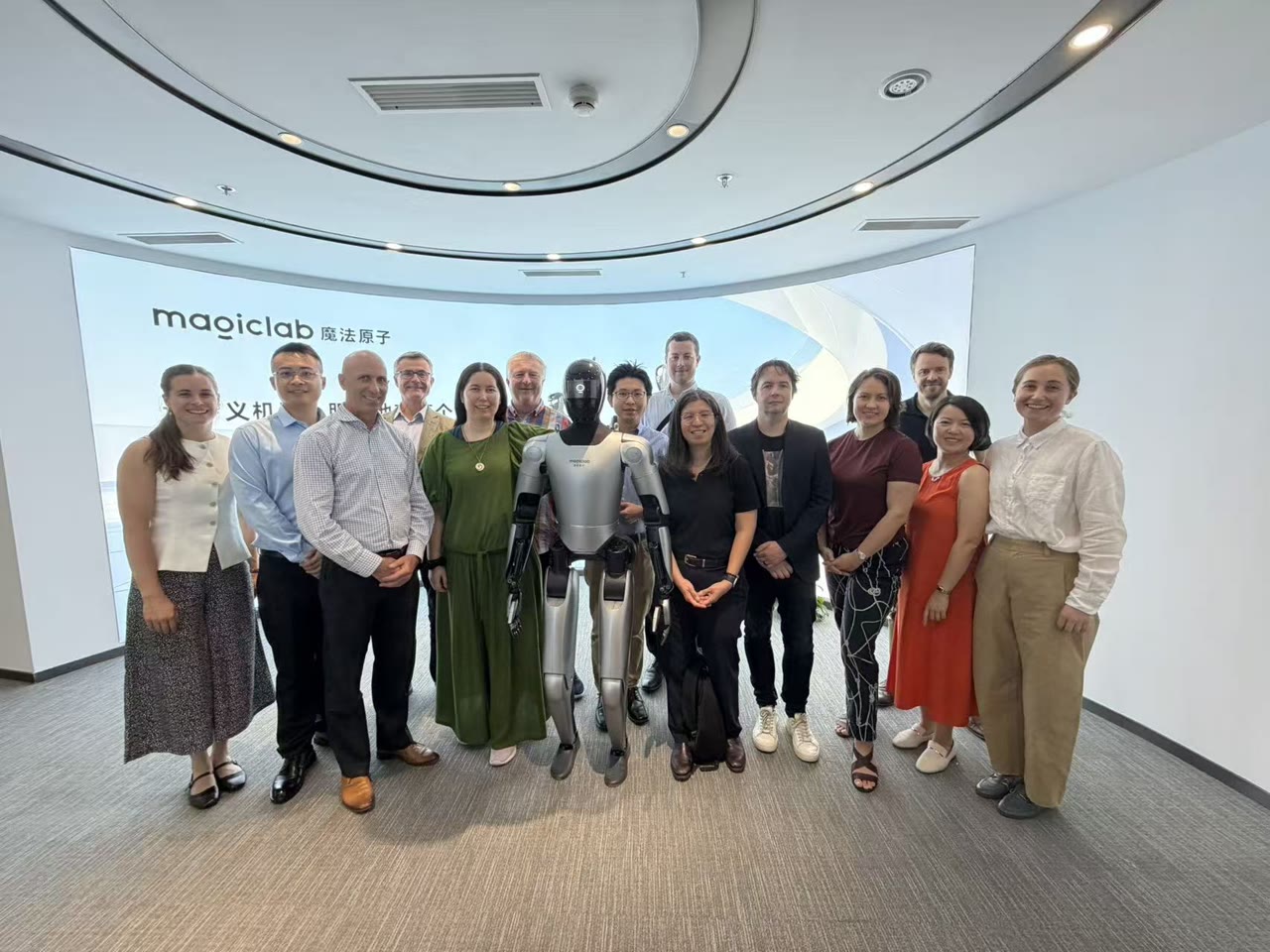
MagicLab launched in January 2024 and had already reached 500 staff, 80% of them engineers. They ship robot dogs at iPhone prices alongside humanoids, with an open-source SDK and 90% of the hardware built in-house. One demo we will not be seeing in New Zealand any time soon: police robots.
Dreame was the highlight of the morning and the source of the iteration-speed lesson: more than 200 businesses under their ecosystem through licensing or co-branding, the vegetable-aware fridge, the stair-climbing vacuum, the voice-controlled tap, and internal units competing on the same product. Alibaba rounded out the day with the Qwen numbers (2 billion downloads this year, 250,000 derived models) and the fashion-design failure and rebuild that became the keep-humans-in-the-loop lesson above.
Day 5: Hangzhou City Brain, Unitree and DEEPRobotics
The final day moved to Hangzhou. The City Brain operation centre is where the legal AI (drafting documents and answering council questions at 90% accuracy), the fall-detecting hard hats, the lone-worker cameras and the traffic-light optimisation all live. Da Feng, which builds performances and shows for the sports, culture and tourism sector, demonstrated Arkasil: while most companies compete on the best base robot, Arkasil built the software layer that controls any number of robots through natural language.
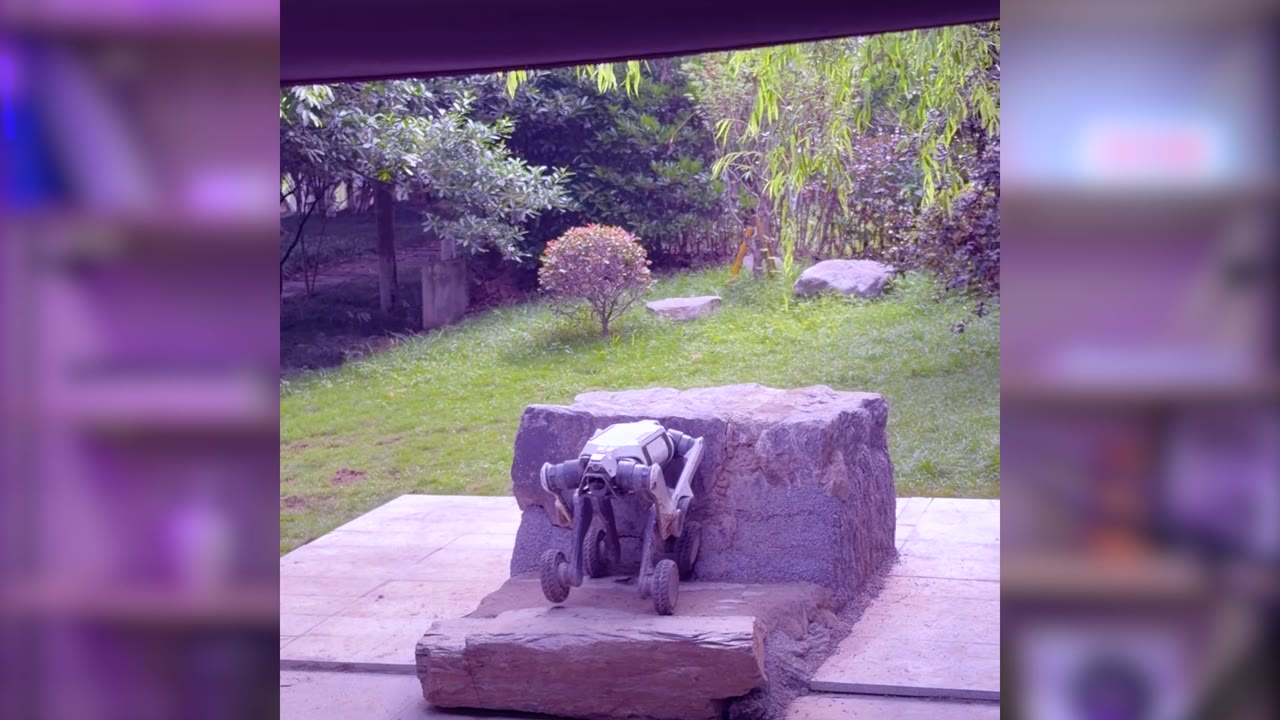
Unitree was surreal after years of watching their products online, and it confirmed that robot dogs have by far the most real-world use cases once you weigh them against the complexity of the task. DEEPRobotics hit closest to home. My last role before Harkness AI was AI work at an electricity distributor, so I knew the asset-inspection use case: a robot walking the site photographing equipment for degradation. They are now testing a humanoid that lives on a substation and can do the switching operations that, until now, only a human could perform.
Four takeaways for New Zealand
- The frontier is data and iteration speed, not hardware. Our edge is the niche data we already own, especially in agriculture.
- AI is going deep in the sectors we use every day. Healthcare, banking and infrastructure are changing at a scale that’s hard to picture until you see it.
- National direction accelerates everything. We don’t need central control here, but we do need to shorten our loops, whether that comes from government or the private sector.
- Skills are the real constraint. Be AI first whatever you do, and stay adaptable, because things are changing fast.
I came home with my brain completely fried in the best way. The scale over there is genuinely different, but the fundamentals are what we already know and value: solve the real bottleneck, shorten the loop, keep humans accountable, and build for production, not the demonstration.
If you’d like help bringing some of this thinking into your own business, reach out for a free 30-minute chat.