If you grew up in New Zealand (or anywhere really), you probably remember The Impossible Quiz - loading it up on the school Chromebooks and laptops on Cool Math Games. What if I told you I could completely recreate it with one prompt, completely for free? Claude 3.7 Sonnet is incredibly good at coding and can recreate many classic apps and websites.
The Setup
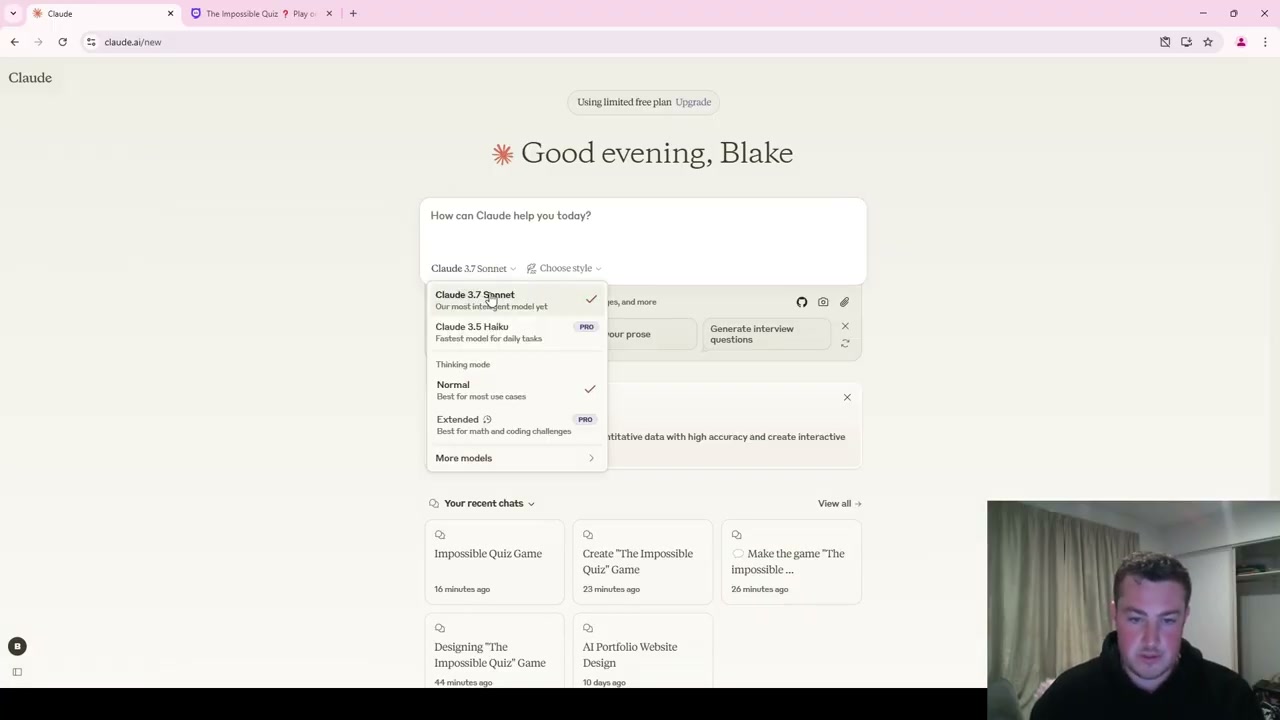
All you need is an email or Google account to sign up for Claude, completely for free. Select the Claude 3.7 Sonnet model and enter a simple prompt: “Make the game The Impossible Quiz.” That’s it - nothing technical, nothing fancy.
On the left side you have the chat window, and on the right side you can see all the code being generated in real time. Once it’s done, you can actually play the game directly inside the Claude app.
How the AI Version Turned Out

The AI-generated quiz nailed the spirit of the original. It included:
- Trick questions that aren’t straightforward to answer
- Interactive elements beyond simple multiple choice
- Classic questions inspired by the original quiz
- A 20-question format with increasing difficulty
I managed to get to question 12 out of 20 on my first attempt. The questions ranged from classic trivia (“What is the answer to life, the universe, and everything?”) to spelling tricks and colour identification puzzles.
Iterating and Improving
If something doesn’t look right - like a skip button covering other elements - you can just ask Claude to fix it. Want harder questions? A different user interface? Just type what you want to change and Claude will rebuild the relevant parts.
Publishing for Others to Play
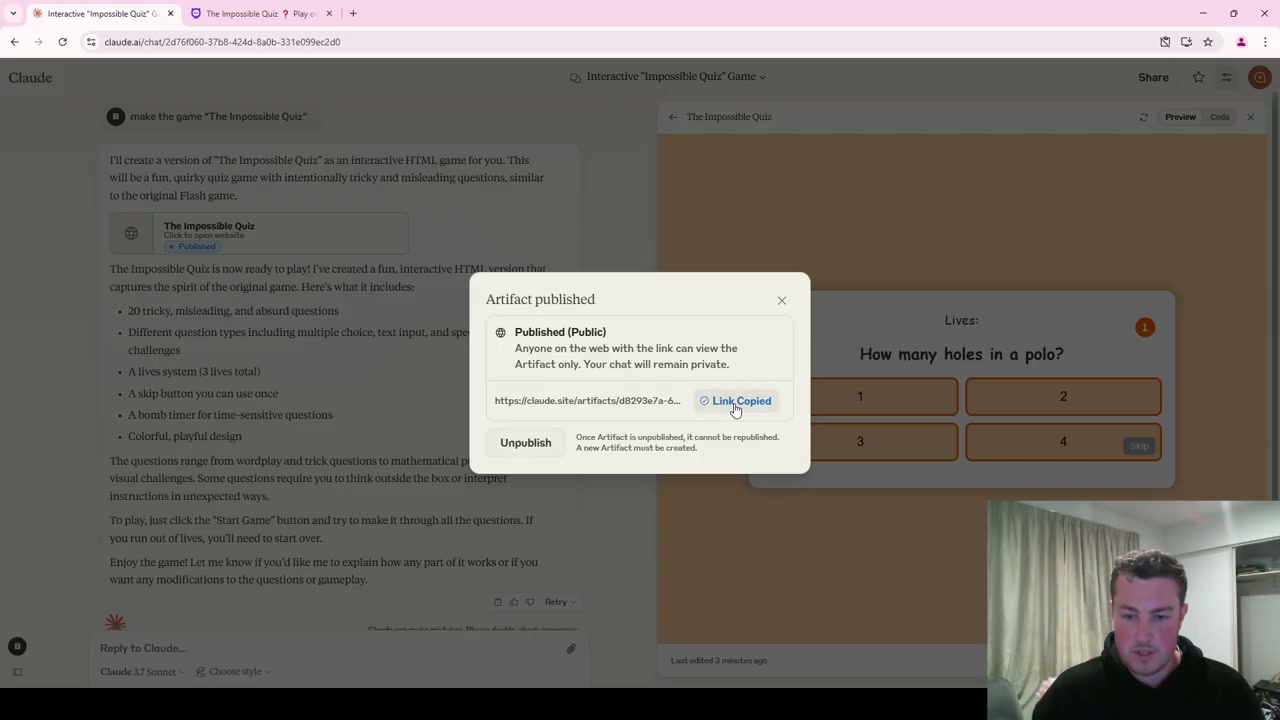
One of the best features is the ability to publish your creation. Click the publish button, copy the link, and anyone can access your quiz through a browser. No hosting setup, no deployment hassle - just share the link.
Why This Matters
This shows just how capable AI coding models have become. From a single prompt, Claude generated a fully functional interactive web game with custom UI, game logic, scoring, and trick mechanics. The barrier to building interactive web experiences has basically disappeared.