I wanted to know how realistic AI voice cloning actually is, so from my studio here in New Zealand I created two versions of my voice using ElevenLabs - one with just 10 seconds of audio, and another with 4 full hours of training data.
The results? My parents had no idea they weren’t talking to the real me.
The Experiment Setup
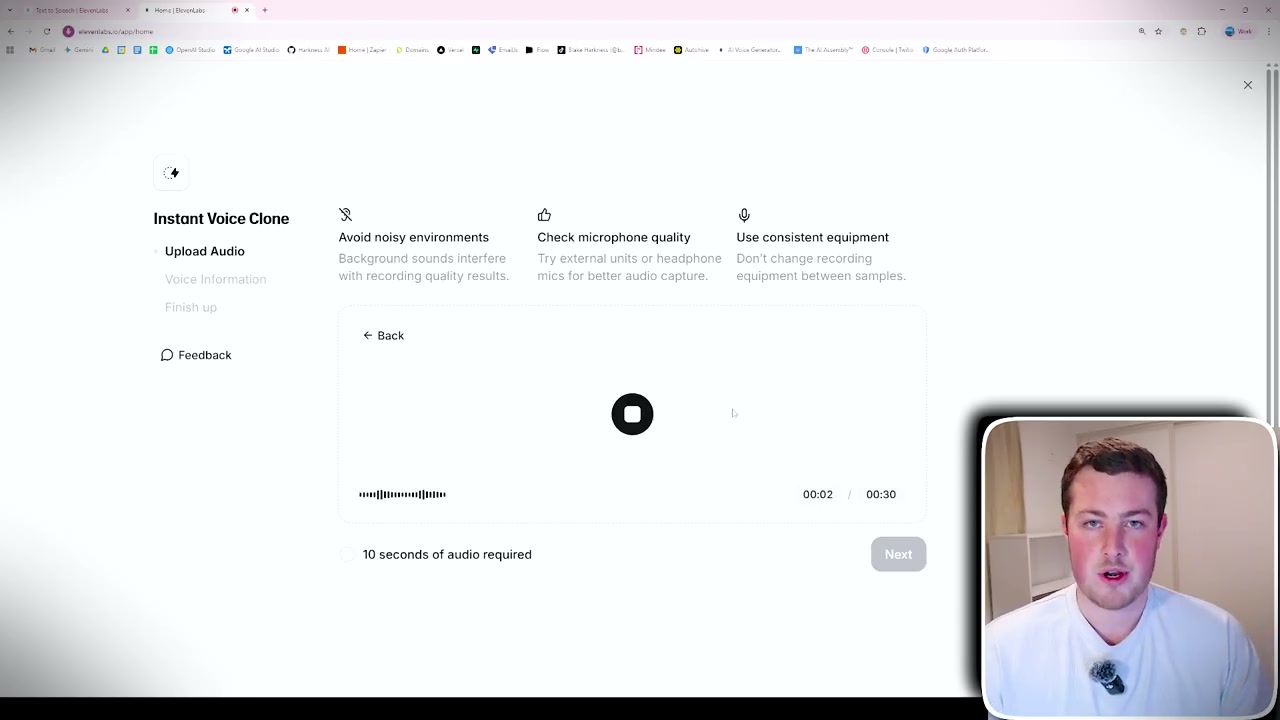
I used ElevenLabs (not sponsored) to create two different voice clones:
Round 1: The 10-Second Clone
The “instant voice clone” feature literally just needed me to record: “Hey, my name is Blake. This is my audio recording for my AI voice clone. I’m really curious to see how well only 10 seconds of audio will do...”
That’s it. Hit next, give it a name, and boom - voice clone created.
Round 2: The Professional Clone
For this one, I gathered 4 hours of audio from YouTube videos, public speaking clips, and various recordings of myself. The platform guides you through best practices for quality, and there’s even voice verification to make sure you can’t clone someone else’s voice without permission.
The Reality Check
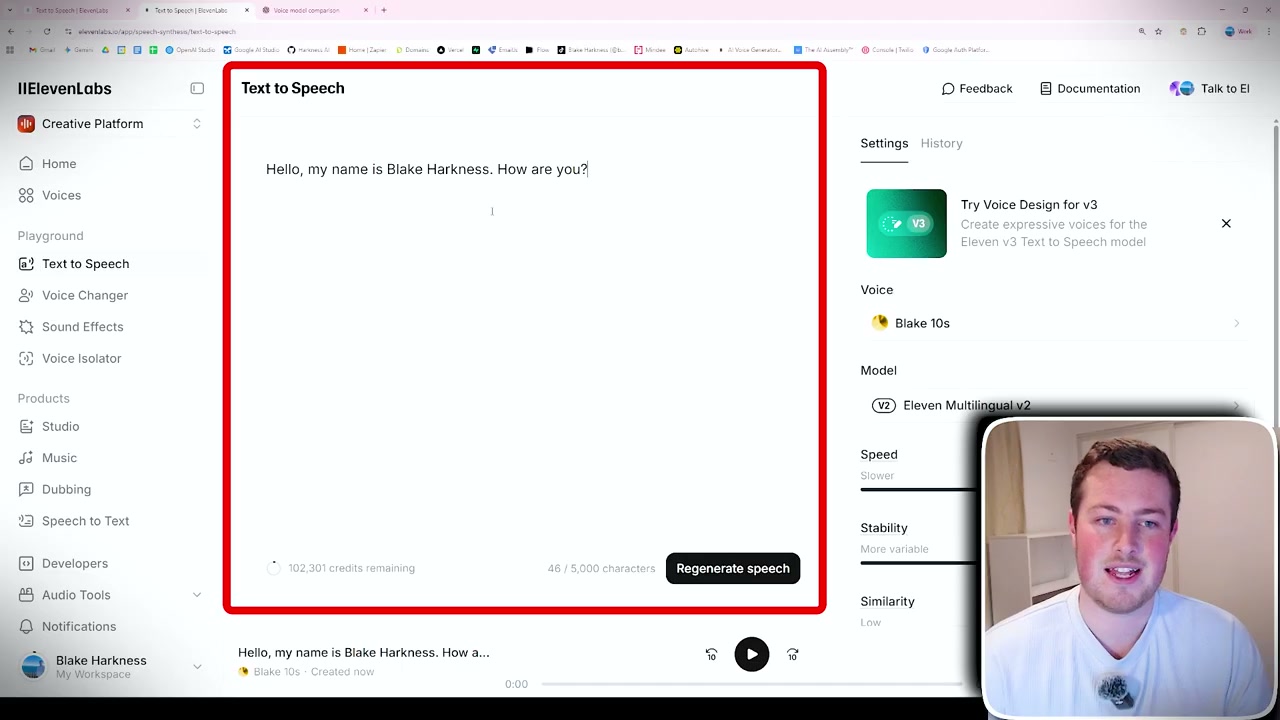
Testing time with a simple phrase: “Hello, my name is Blake Harkness. How are you?”
The 10-second version? Honestly, it was pretty terrible. Very American-sounding, nothing like me at all. Kind of what you’d expect from such limited data.
But the 4-hour version? Creepily good. I listened back and thought, “There’s no way I’d be able to tell this wasn’t me if I just heard the audio.”
The Real Test: Fooling Family
Here’s where it gets interesting. I generated a casual voice message: “Just sending this whilst driving. Danni will be around to come down with us the week before Christmas.”
I sent it to my mum and dad - the people who know my voice better than anyone. Not one of them suspected it was AI-generated. They all responded normally, having no idea that it wasn’t actually me speaking.
What Really Shocked Me
Two things blew my mind:
- The quality: Even my closest family couldn’t tell the difference
- The cost: For just $18.33/month, anyone can access this technology
With 100,000 credits included, I barely made a dent in my allowance despite all this testing.
The Bigger Picture
This technology opens up incredible possibilities:
- Content creators who lose their voice can keep working
- Video game developers can create dynamic character voices affordably
- Audiobook narrators can maintain consistency across projects
- International businesses can localise content in authentic voices
But it also raises important questions about authenticity and consent in our digital world.
The Bottom Line
AI voice cloning has crossed the line from “impressive demo” to “indistinguishable from reality.” The 4-hour training approach delivers results that are genuinely scary-good, whilst the 10-second option... well, let’s just say you get what you pay for.
The technology is here, it’s accessible, and it’s remarkably affordable. Whether that excites or concerns you probably depends on how you plan to use it.
Watch the Full Experiment
Want to see all of this in action? Check out my YouTube tutorial: Watch on YouTube
What’s your take on AI voice cloning? Have you experimented with it yourself?