People aren’t using Google search anymore to find information. Instead, they’re using AI tools like ChatGPT to help them answer questions. If you’re looking for the best insurance broker in Christchurch and you asked ChatGPT and your business doesn’t come up, you’ve lost a potential client without even knowing it.
I’m going to show you exactly how I optimise for AI in my own business, which has directly resulted in me getting more leads.
How Has Search Actually Changed?
Traditionally, you’d go to Google and search a question like “the best plumber in Christchurch.” You’d get a huge list of links, but honestly, you’re only looking at the top three. You’d click on one and go forward with it.
Now with AI, instead of going on Google, people open ChatGPT, Gemini, or another AI tool and ask the same question. The AI gives them a direct answer with specific recommendations - no list of ten links to browse through. If your business isn’t in that AI-generated answer, you’re invisible.
SEO vs GEO: What’s the Difference?
SEO (Search Engine Optimisation) is about ranking on Google. GEO (Generative Engine Optimisation) is about appearing in AI-generated answers. Think of SEO as the baseline foundation - all of its principles still help with AI optimisation, but you need to do additional things to appear in generative AI chatbots more reliably.
5 Key Steps for Great GEO
1. Write Clear Statements
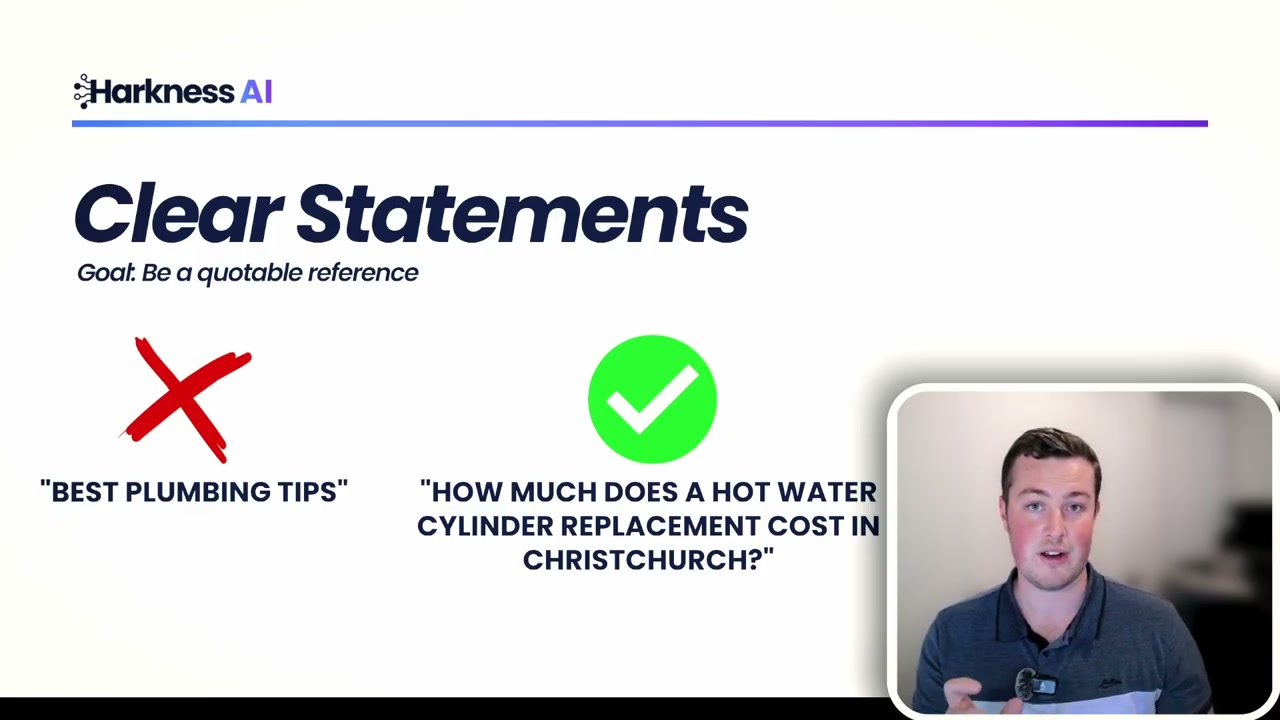
Be a quotable reference. AI likes to pull out quotes of information and give a source. Traditional marketing copy like “We’re the best plumber in town!” doesn’t work for AI. Instead, write factual, specific statements like “Harkness AI is a Christchurch-based AI engineering consultancy specialising in helping New Zealand businesses implement AI solutions.”
AI can take that sentence, understand exactly what you do, where you are, and who you serve, and use it as a reference when someone asks a relevant question.
2. Structure Your Information for AI
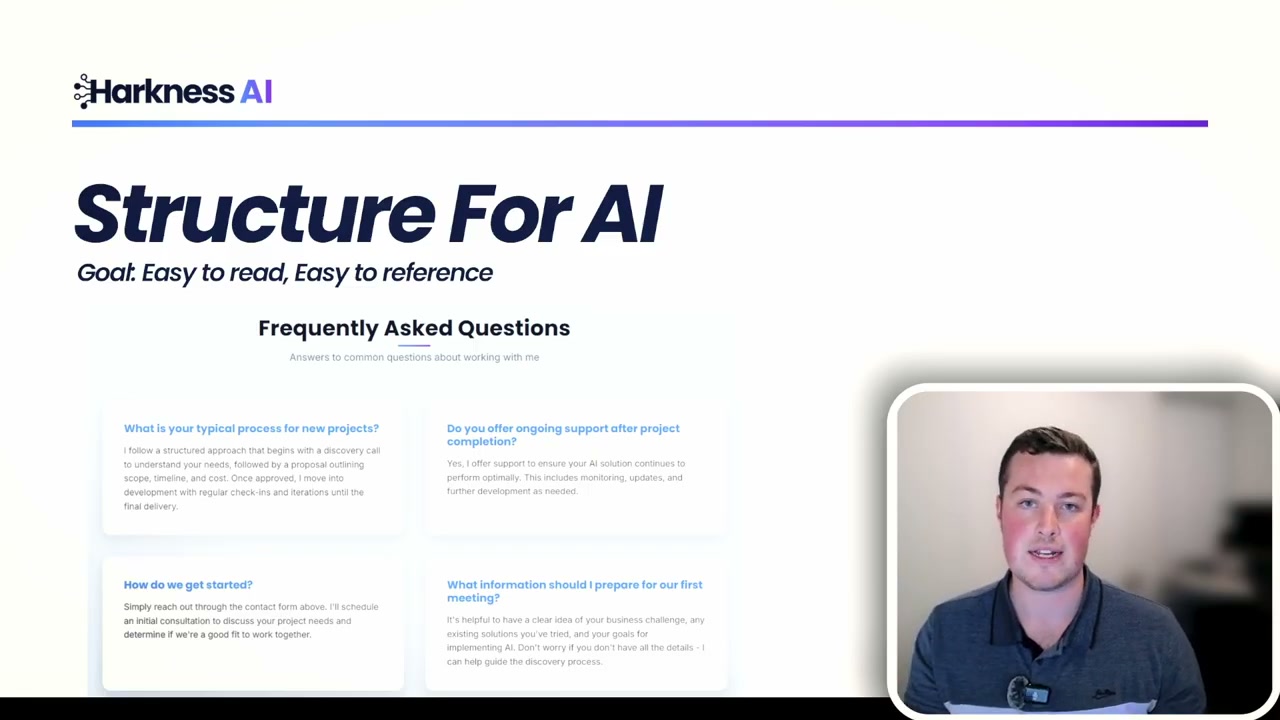
Use clear headings, FAQ sections, and well-organised content. AI models parse structured content much more effectively. Having a proper FAQ page with common questions and direct answers makes it easy for AI to extract and cite your information.
3. Build Presence Everywhere
AI models don’t just look at your website. They scrape information from across the internet - directories, review sites, social media, forums. The more places your business appears with consistent information, the more likely AI is to trust and recommend you.
Make sure your business is listed on Google Business Profile, industry directories, review platforms, and social media with consistent NAP (Name, Address, Phone) information.
4. Add JSON-LD Schema
This is a bit more technical but incredibly powerful. JSON-LD schema is structured data that sits behind the scenes on your website. It breaks down all the core information about your business in a structured way, so AI can search much more efficiently and is more likely to surface you.
It’s completely invisible to anyone browsing your site - it only helps AIs that are scraping information. The best part is you can use AI models like Claude or ChatGPT to write this schema for you if it has access to your codebase.
5. Monitor Your AI Visibility
Regularly go into tools like ChatGPT, Gemini, or Google search and put in key questions your customers would be asking. See if your business appears in the responses. Track this over time and adjust your strategy based on what’s working.
Key Takeaways
The way people search for businesses is fundamentally changing. AI chatbots are becoming the new front door for customer discovery. By combining solid SEO foundations with GEO-specific strategies - clear statements, structured data, broad presence, JSON-LD schemas, and ongoing monitoring - you can make sure your business shows up when it matters most. There is a fuller walkthrough, alongside the content side of the same job, on the AI for content and social hub.