I recently had the opportunity to speak to a group of New Zealand engineering students about my journey into AI and what it takes to build a career in this space. I’ll cover everything I covered - from how I got started, to what skills are actually needed, and how you can stand out in a crowded job market.
My Journey: From Teaching to AI Engineering
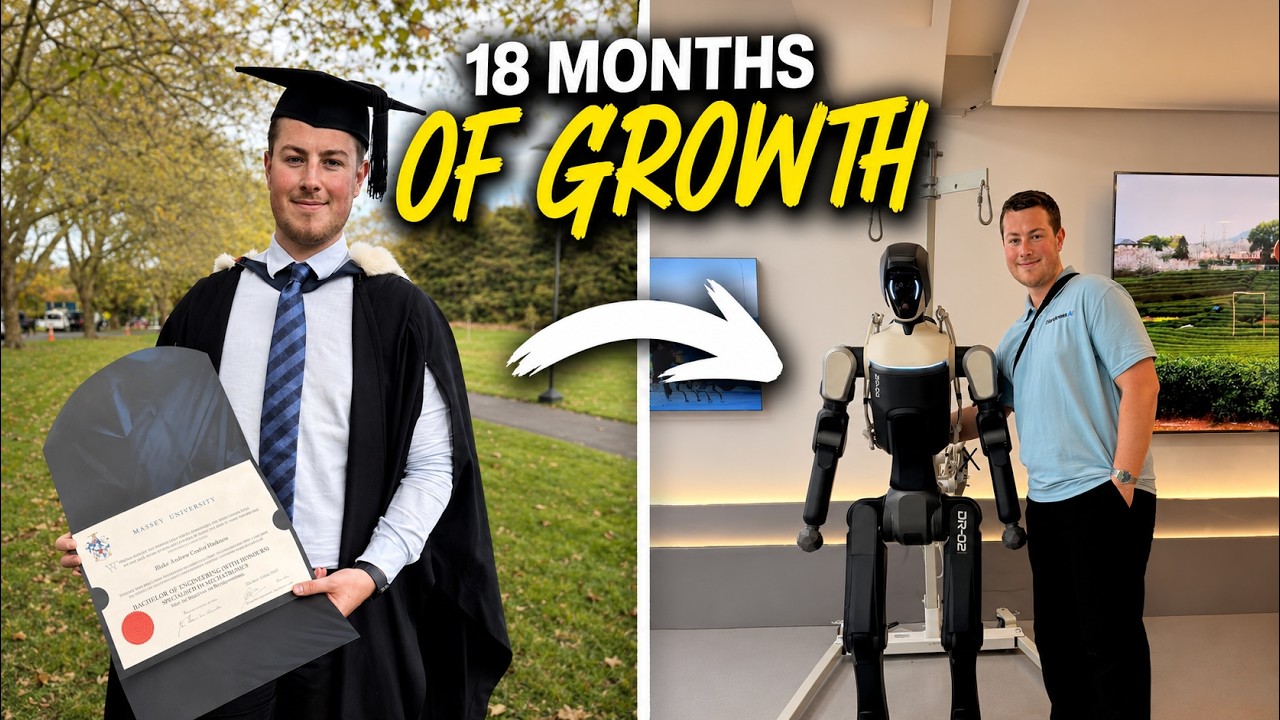
Originally, I wanted to be a teacher. I was passionate about education, did coaching and tutoring, but found out the salary wasn’t going to work for me. So I chose the engineering path and went up to Massey University for a mechatronic engineering degree.
About halfway through my degree, ChatGPT was released. I put all my exams and assignments through it and realised pretty quickly that everything I was being taught, AI could answer. That raised a big question: what does this mean for my career? But I quickly realised the degree isn’t worthless - it teaches problem solving and domain expertise. AI is just a tool to do the job better.
Landing My First AI Role
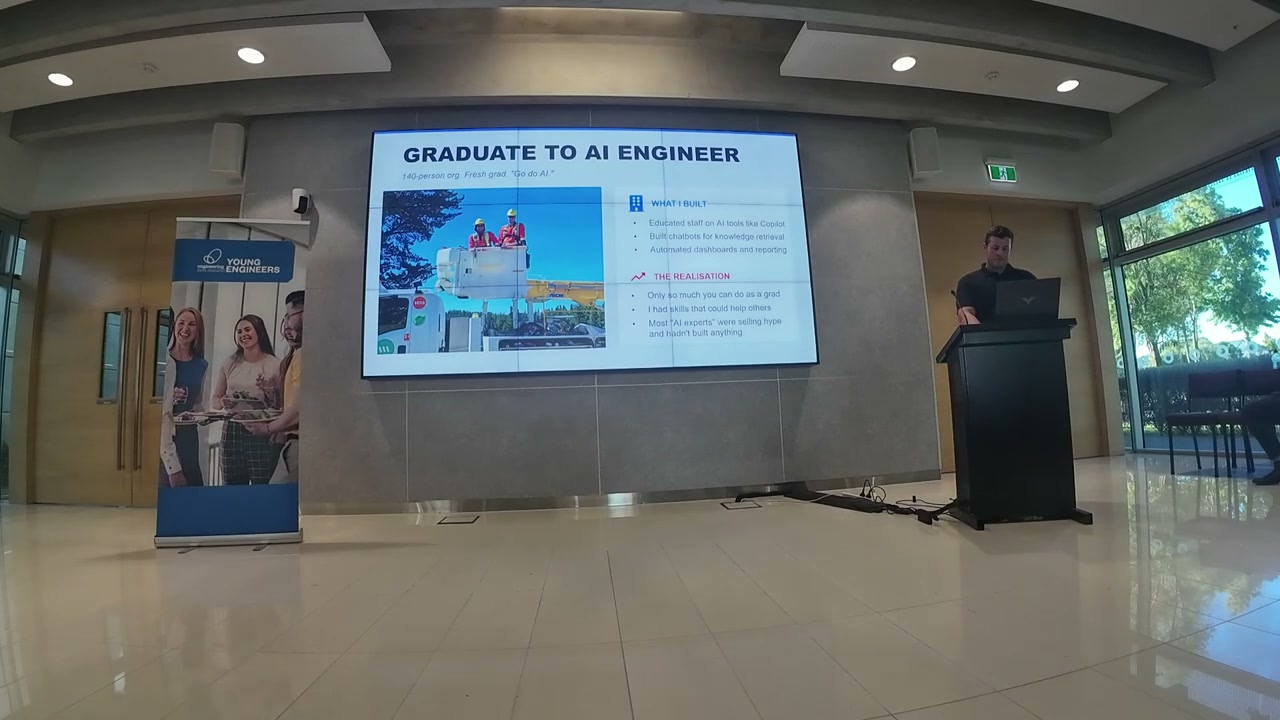
I got a few job offers after graduating. One was at Main Power in North Canterbury - the only role that had a mention of AI in the job description. They had about 140 staff and essentially said, “Go do AI for us.” That was quite the challenge as a fresh graduate.
What it turned into was education - teaching staff how to actually use tools like Copilot, how to prompt AI effectively, and how to build custom agents. I also built chatbots for knowledge retrieval, document comparison, and process automation.
The realisation I had pretty quickly was that as a grad, you’re at the bottom of the food chain. A 140-person company isn’t necessarily going to listen to the new person, even if you know more about AI than anyone else there.
Cold Outreach and Learning the NZ AI Landscape
I went out and cold-messaged pretty much everyone I could find on LinkedIn who had AI in their title across New Zealand. I spoke to around 75 people in the first six months. About half responded, and some still haven’t replied to this day.
The biggest benefit was learning. People love talking about themselves and their journey. Through those conversations, I pieced together what the AI landscape looks like across New Zealand - and the main takeaway was that most businesses are lost. They have no idea what AI means for them, and it’s still moving incredibly fast.
Social Media: The Cheat Code
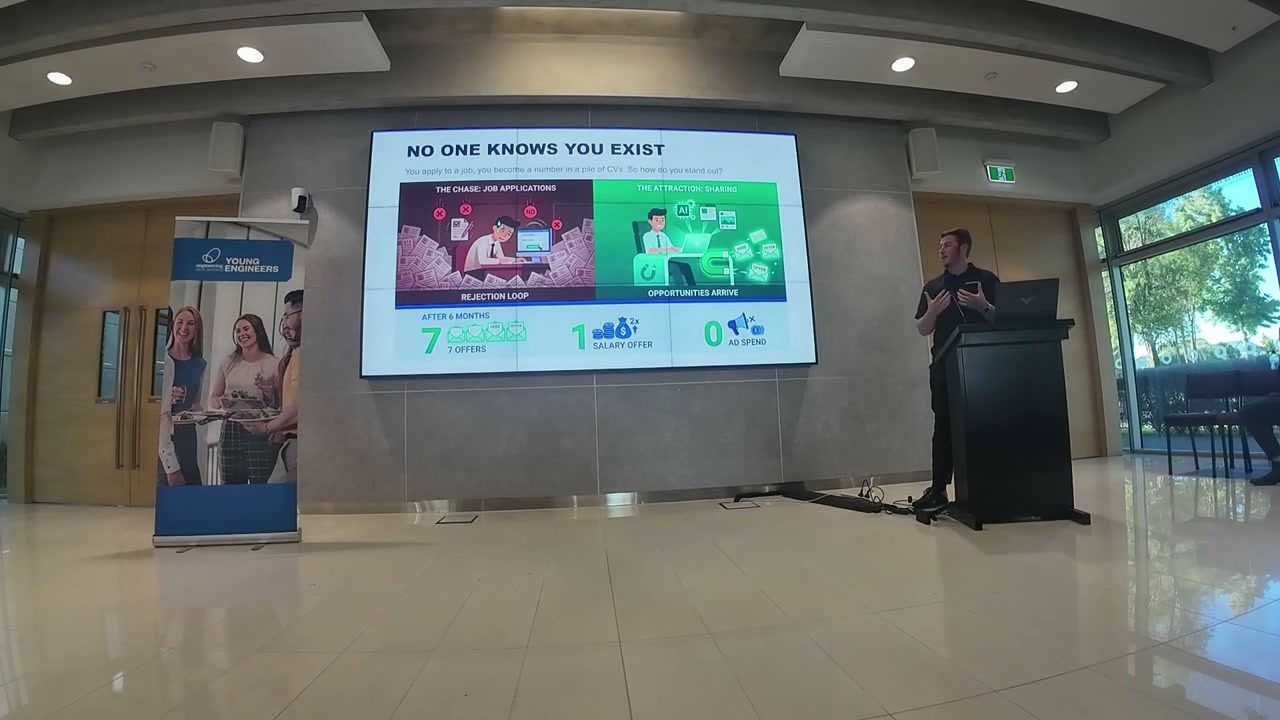
While still working at Main Power, I started posting on LinkedIn and YouTube. The videos were terrible at first - very cringe - but after six months of consistently putting myself out there, I had seven different job offers across New Zealand and one in Australia. One of them was double my salary. All of that was inbound, with zero dollars spent on ads.
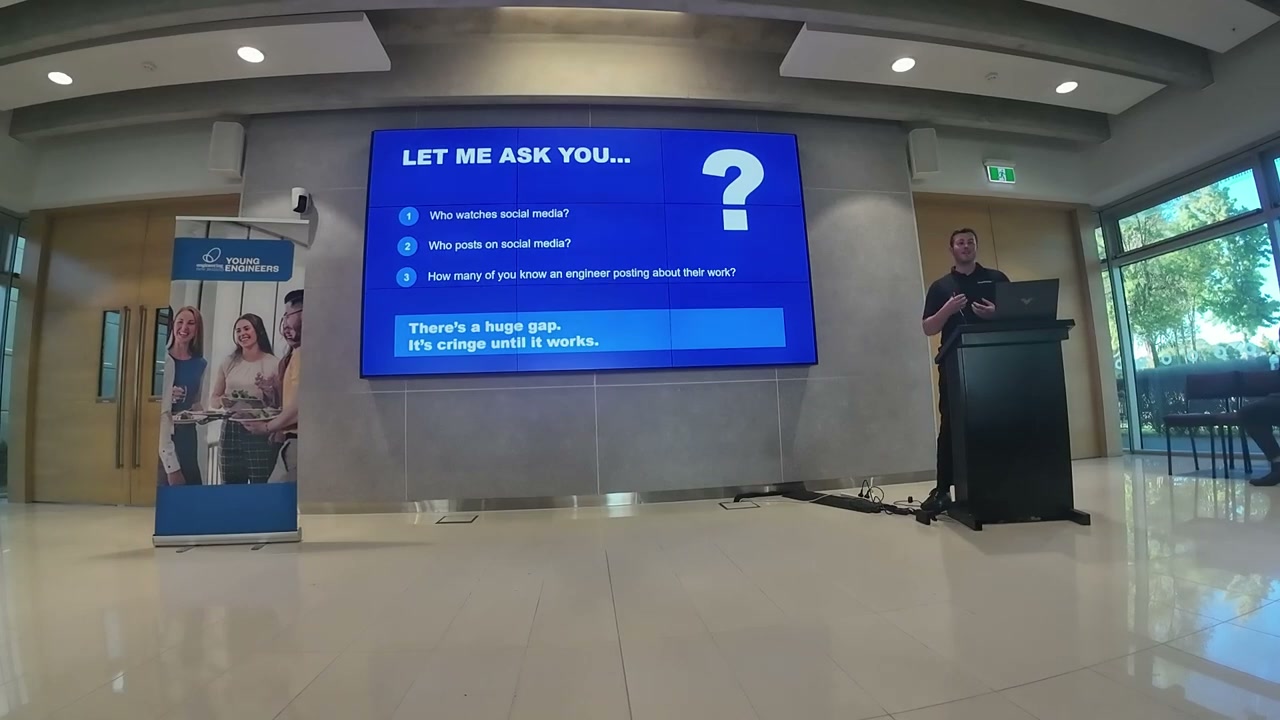
When I was a student, I wanted to find real engineers posting about their actual work. I couldn’t find anyone. There’s a massive gap, especially in New Zealand. A lot of people think posting on social media is cringe - but it’s only cringe until it works. When that one post leads to a job offer at double your salary, it’s not cringe anymore.
Social media is the cheat code for becoming a magnet for opportunities. I’m just sitting there talking to my camera about AI - nothing fancy - and I’ve hit almost a million views in eight months. Views don’t matter as much as who’s watching. When you’re posting about engineering in New Zealand, there’s not much competition, so all those views are highly targeted.
The Timeline
- November 2024: Started at Main Power
- May 2025: Started posting content
- Mid 2025: Got my first paying client from someone who watched a YouTube video
- August 2025: Hired my first team member, Alex
- November 2025: Met Karina, leading to a new business opportunity
- 2026: Now doing three days a week at Edison’s while running Harkness AI
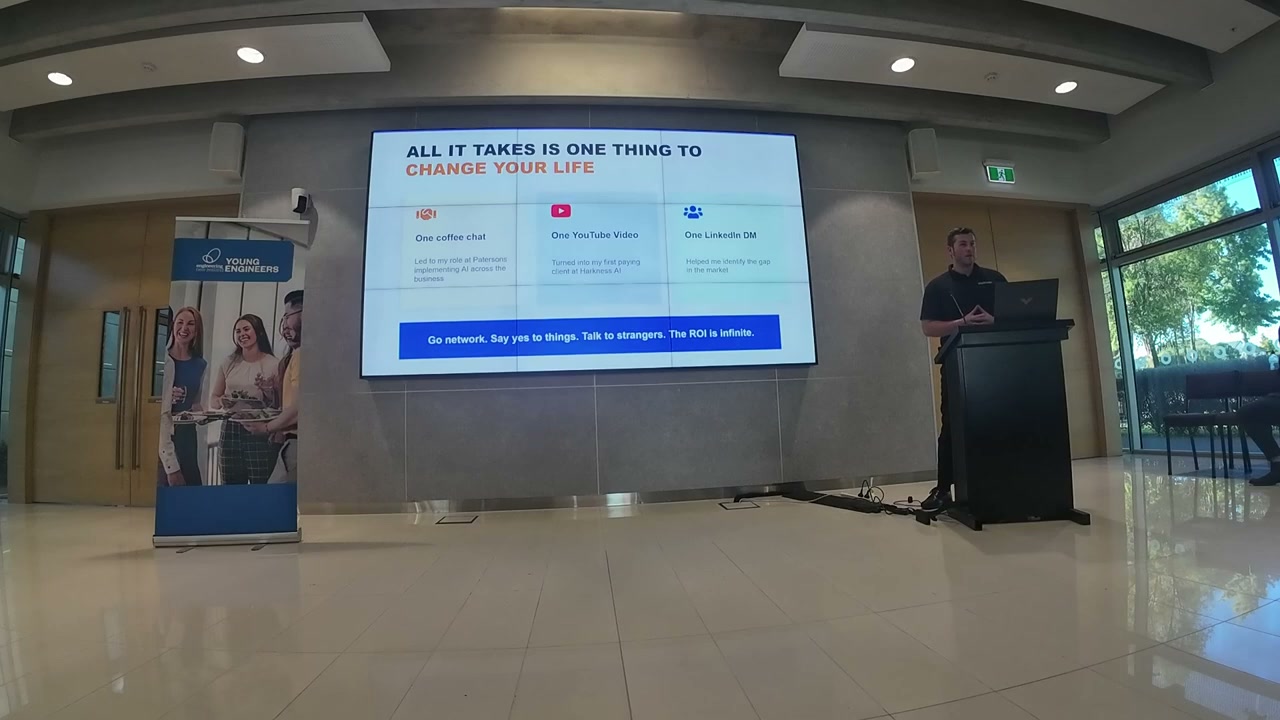
All it takes is one thing to completely change your life. One coffee chat led to a role. One YouTube video led to my first paying client. One LinkedIn DM helped me understand the entire AI market.
What I Do Now
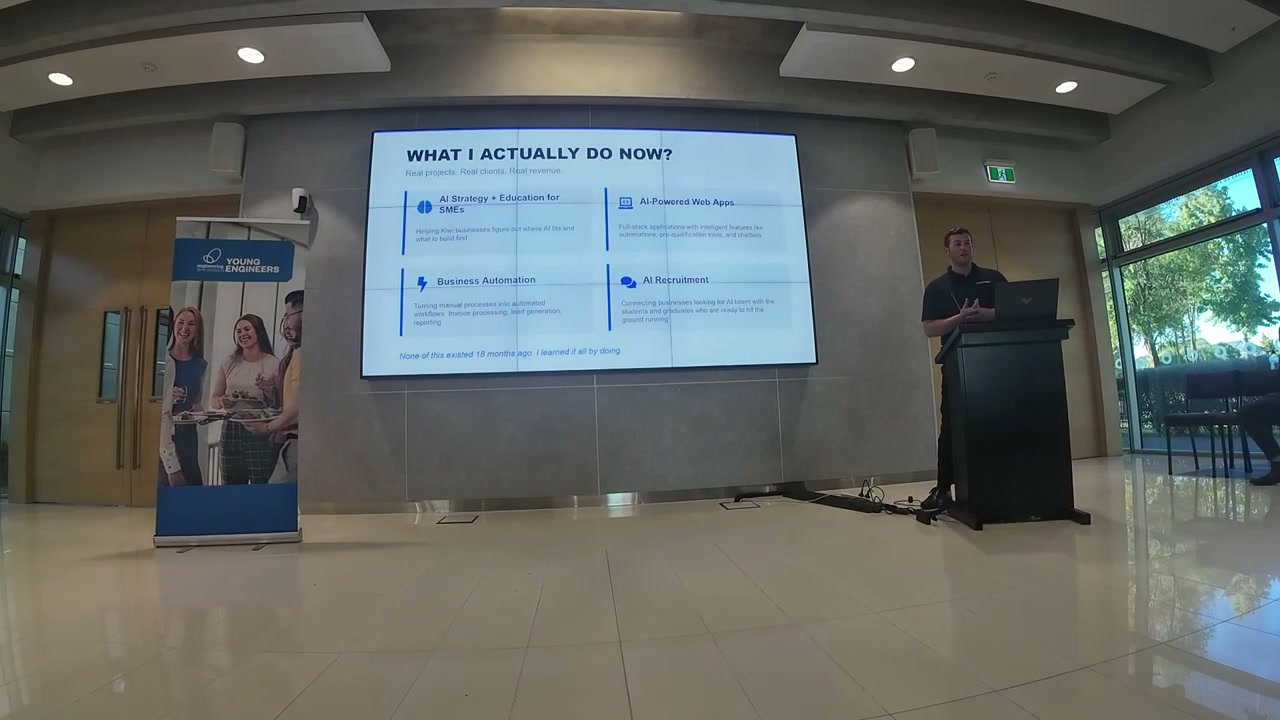
Through my work, I’ve been able to help a huge range of businesses - not just engineering companies, but wealth management, mortgage advice, pest control, plumbing, and more. You get to see behind the scenes of how all these different businesses operate, which is an incredible learning experience.
- AI strategy and education: Where does AI sit within a business? How can we automate processes?
- AI-powered web apps: Full-stack development for internal tools or customer-facing products
- Business automation: You wouldn’t believe how many businesses still copy and paste between systems
- AI recruitment: Matching businesses who need AI talent with students and graduates who have the skills
The Skills That Actually Matter
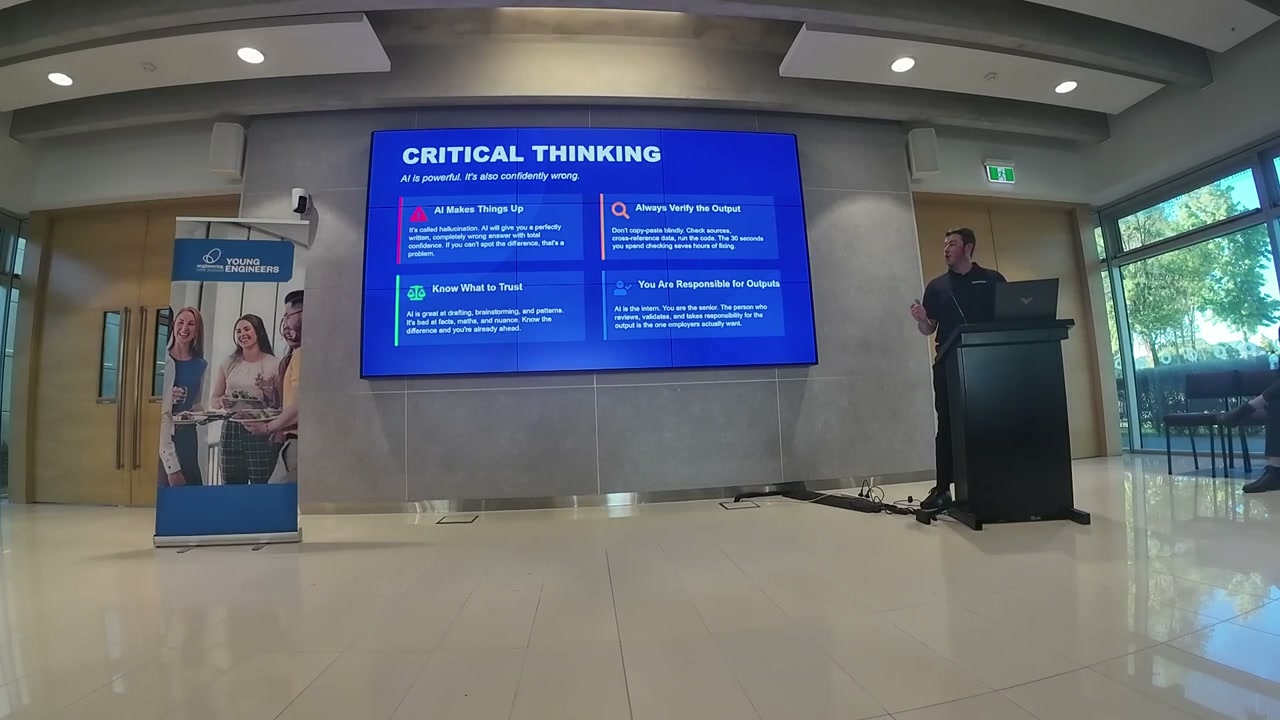
The biggest challenge right now is that most universities treat AI as cheating. They block its use. But in industry, if you can do something faster and better, why wouldn’t you? Here are the skills that are genuinely in demand:
- AI tool proficiency: Can you use ChatGPT, Claude, and other tools effectively? Do you know which ones are better for different tasks?
- Process automation: Whatever role you go into, being able to look at a process and ask “why are we still doing it this way?” makes you incredibly valuable
- Domain-specific knowledge: If you only have AI skills without understanding the actual work, you’ll struggle. It’s the blend of both that makes you powerful
- Critical thinking: AI can be confidently wrong. If you pass off an AI-generated report to your manager without checking it, you own that mistake
- Communication: Not just with people, but with AI. Large language models are prediction engines - how you communicate with them directly affects the quality of the output
The Business Case for AI Skills
Here’s a simple example. Say John spends two and a half hours each week reviewing documents and pulling information. Across ten staff, that’s around 1,300 hours per year. Teach John to use ChatGPT to extract and validate that information, and he might only spend 30 minutes on validation instead. That saves over 1,000 hours per year - at a $100 hourly rate, that’s $104,000 in savings, just from teaching people to use a chatbot.
How to Start
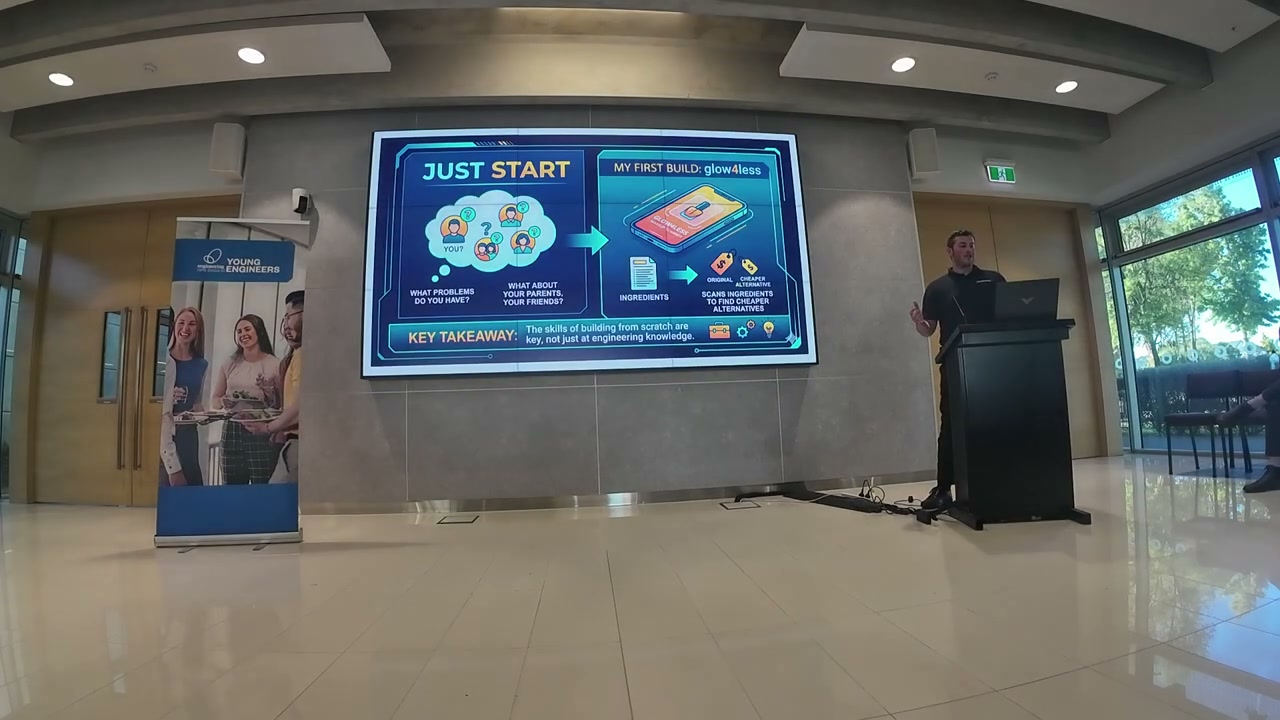
Universities aren’t teaching this. Schools aren’t teaching this. So where do you go to learn? Honestly - just start. Ask yourself: what problems do I have in my day-to-day life? What about my parents, my friends, or someone running a business?
My first project was Glow for Less - a web app for my partner to find cheaper alternatives to makeup products by scanning ingredients. Nothing engineering-related, but it built up the skills of taking a real problem and building a solution.
Building a Community
I noticed that most AI communities are focused on high-level governance and enterprise. So I set up Young Kiwis in AI - a community to connect young professionals in the space. We meet up on the last Monday of every month with member spotlights, talks, and in-person events.
My Advice
If I could tell myself two years ago one thing, it would be: just do it. Post something on social media. Build a project. Talk to someone. The best time to start was yesterday. The second best time is right now. Go build something, go talk to someone, go post something. Just start.