NZ builder: 29 AI use cases, mapped and ranked
A New Zealand builder doing residential and commercial work. Before building any AI tools, we ran two workshops with their AI cohort to find where AI fits, then ranked every use case.
- Client
- A New Zealand construction firm
- Industry
- Residential and commercial construction
- Our role
- AI audit: two workshops, a use case register, an AI policy and strategy
- Delivered
- April 2026
The audit in numbers
- 29AI use cases found, scored and ranked
- 17people in the AI cohort, from leadership to site
- 12items in the 90-day plan: Claude setup plus eleven builds
The brief
The firm set up a 17-person AI cohort, from leadership and quantity surveying to project and site managers. Some were already using AI day to day.
The brief had two parts: train the team up, then find where AI would actually save time and rank it.
How we found where AI fits
- Map the real workEach role group maps its own processes, step by step.
- Tag every stepHuman only, AI with a person checking, or fully automated.
- Sit with the teamsFour small-group sessions walking through their actual work.
- Score every use caseHours saved a week, how sure we are, weeks to build.
- Directors set the orderThe scores are one input. The firm's own priorities are the other.
Start where the work is slow, not where AI fits.
Every step tagged by the people who do it
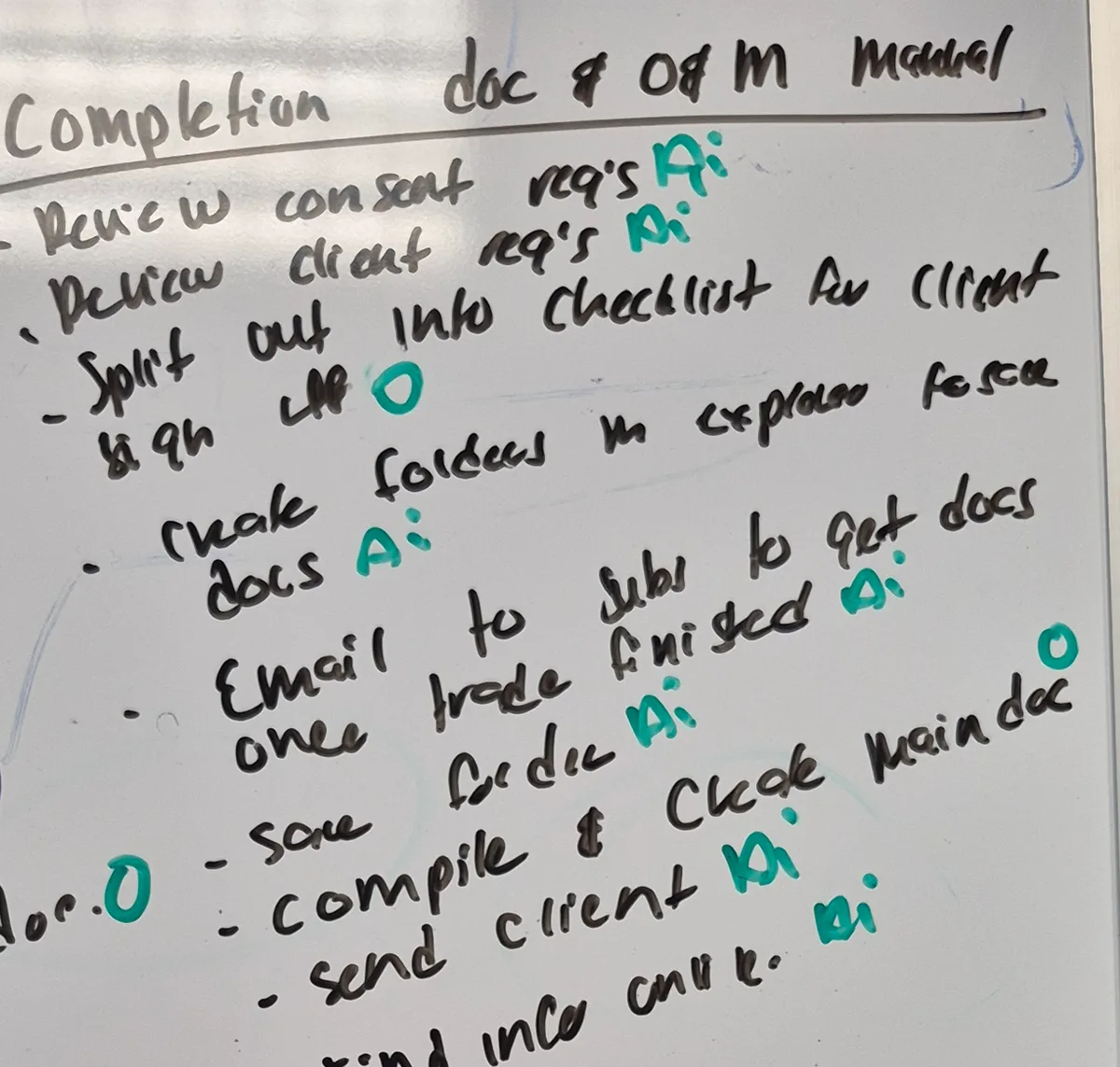
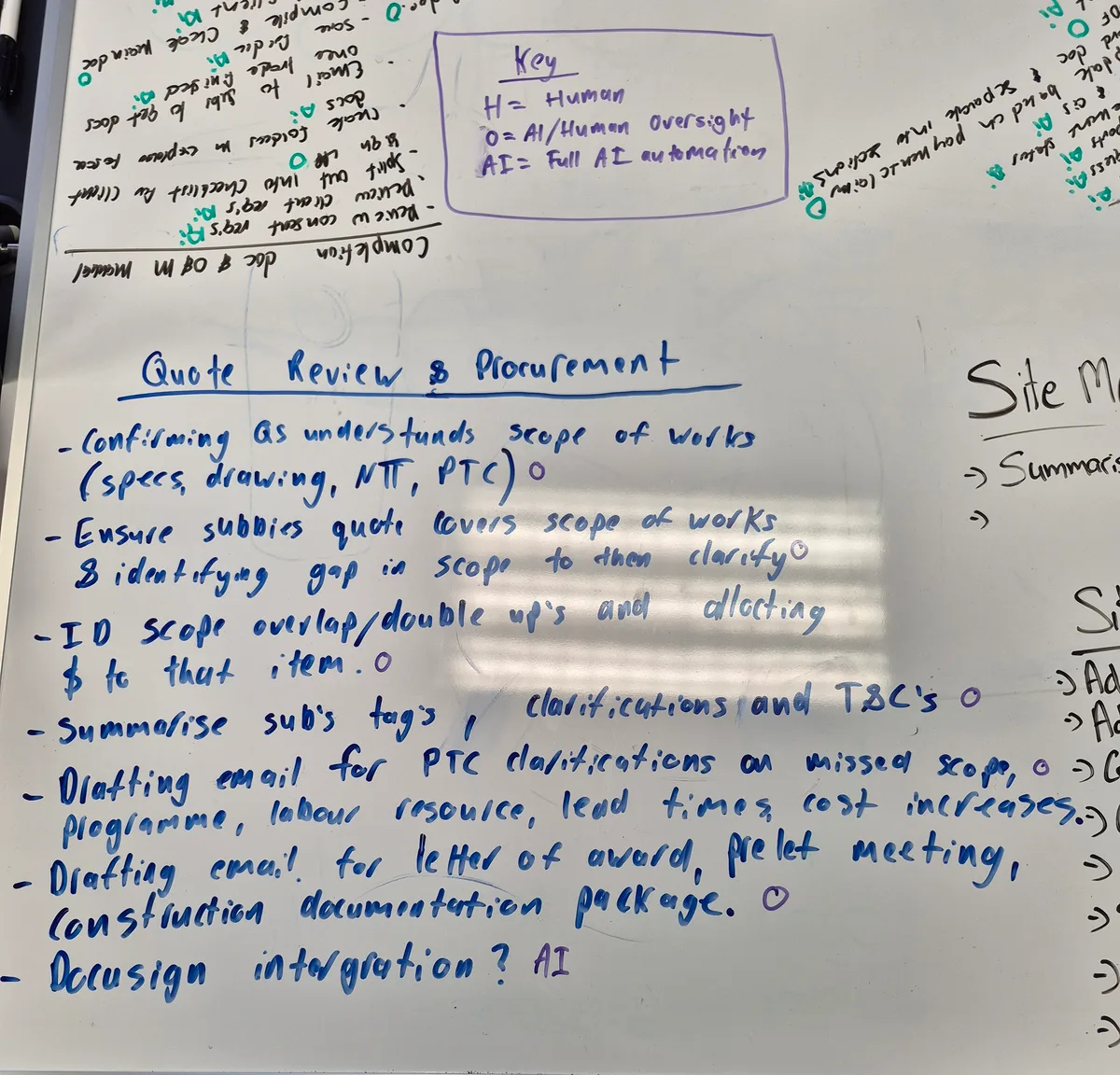
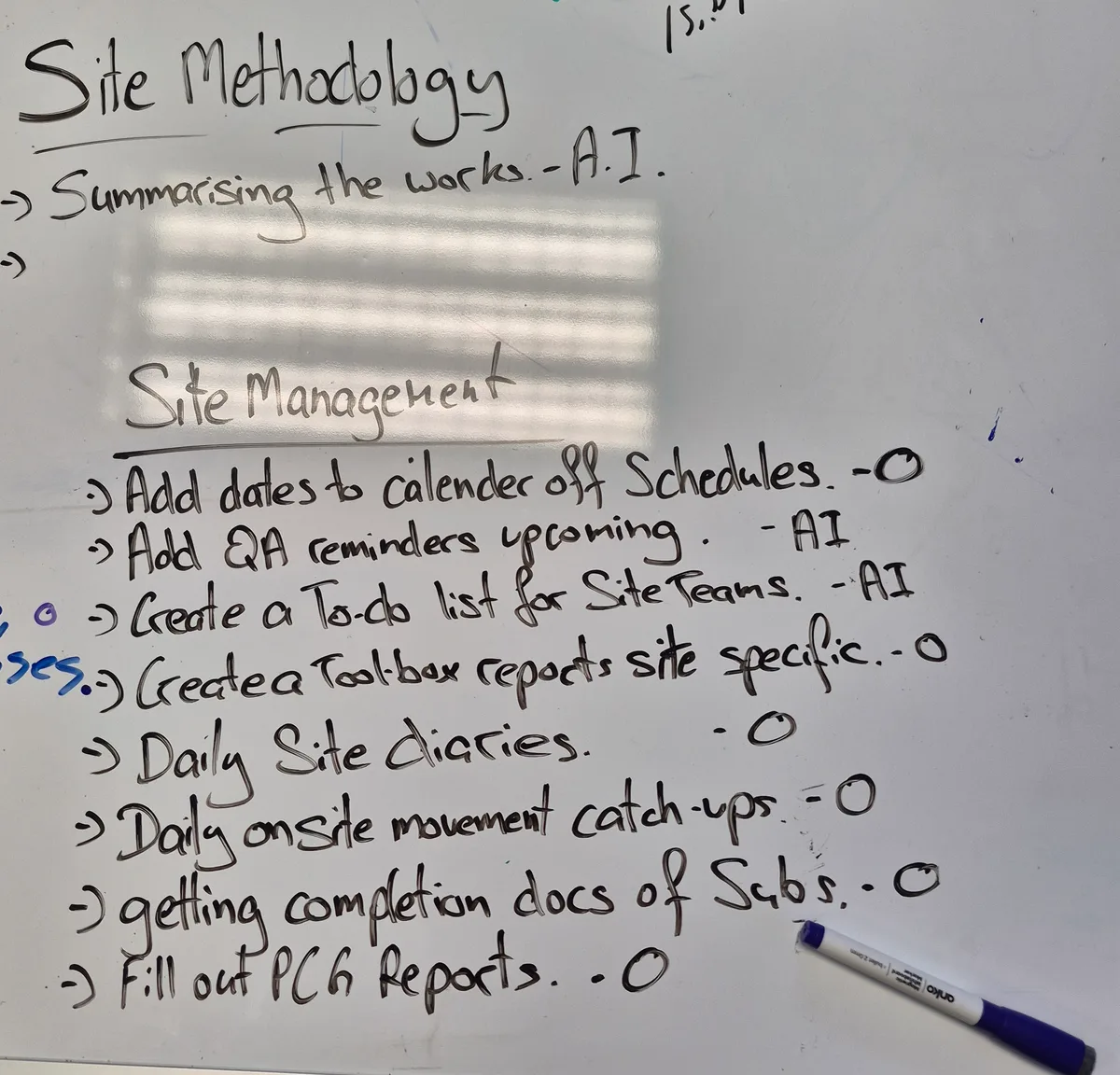
On Day 1, each role group mapped its own processes on the whiteboard, one step at a time. Then they tagged every step: H for human only, O for AI with a person checking, AI for fully automated. Very few steps stayed human only.
29 use cases, scored and ranked
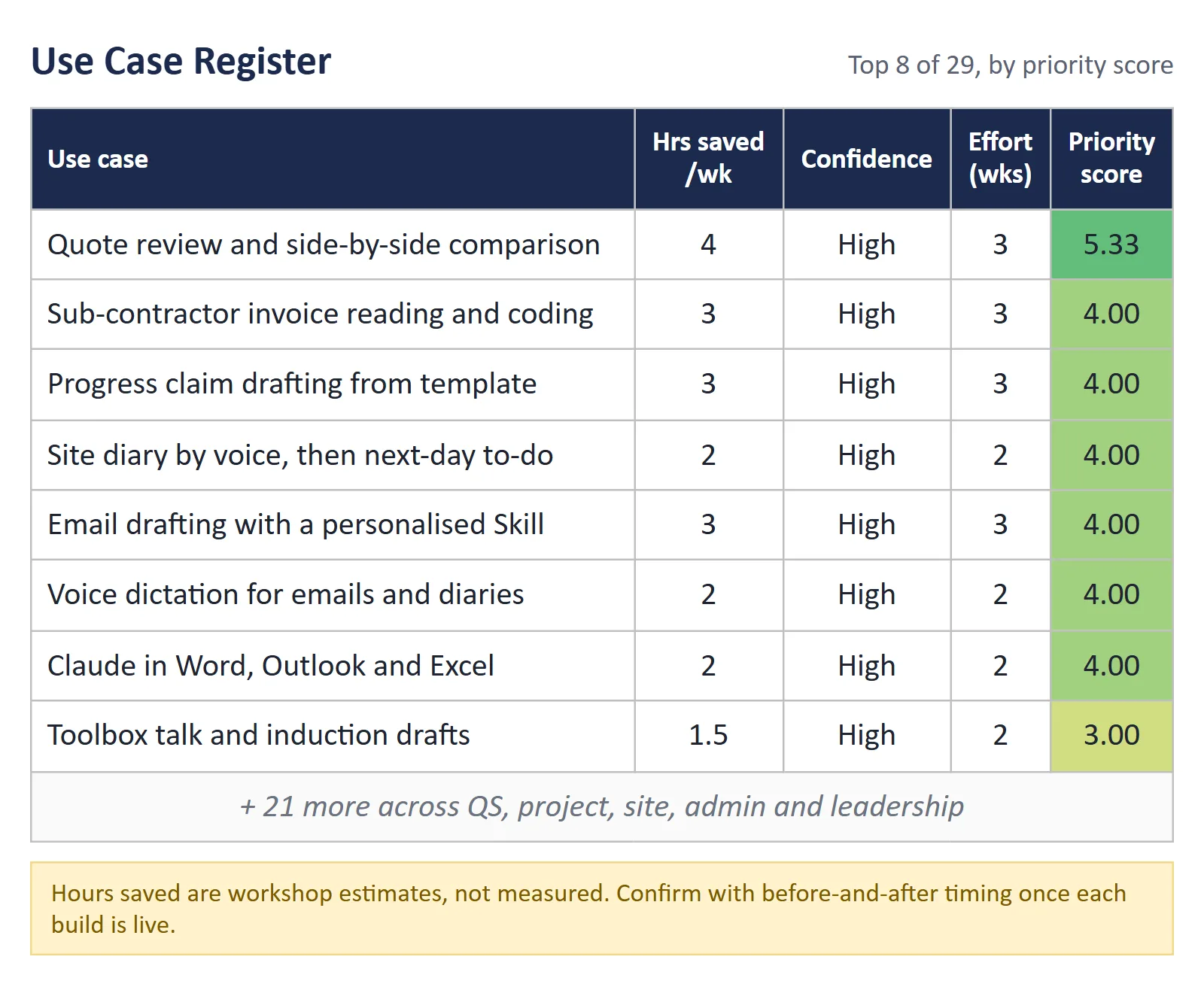
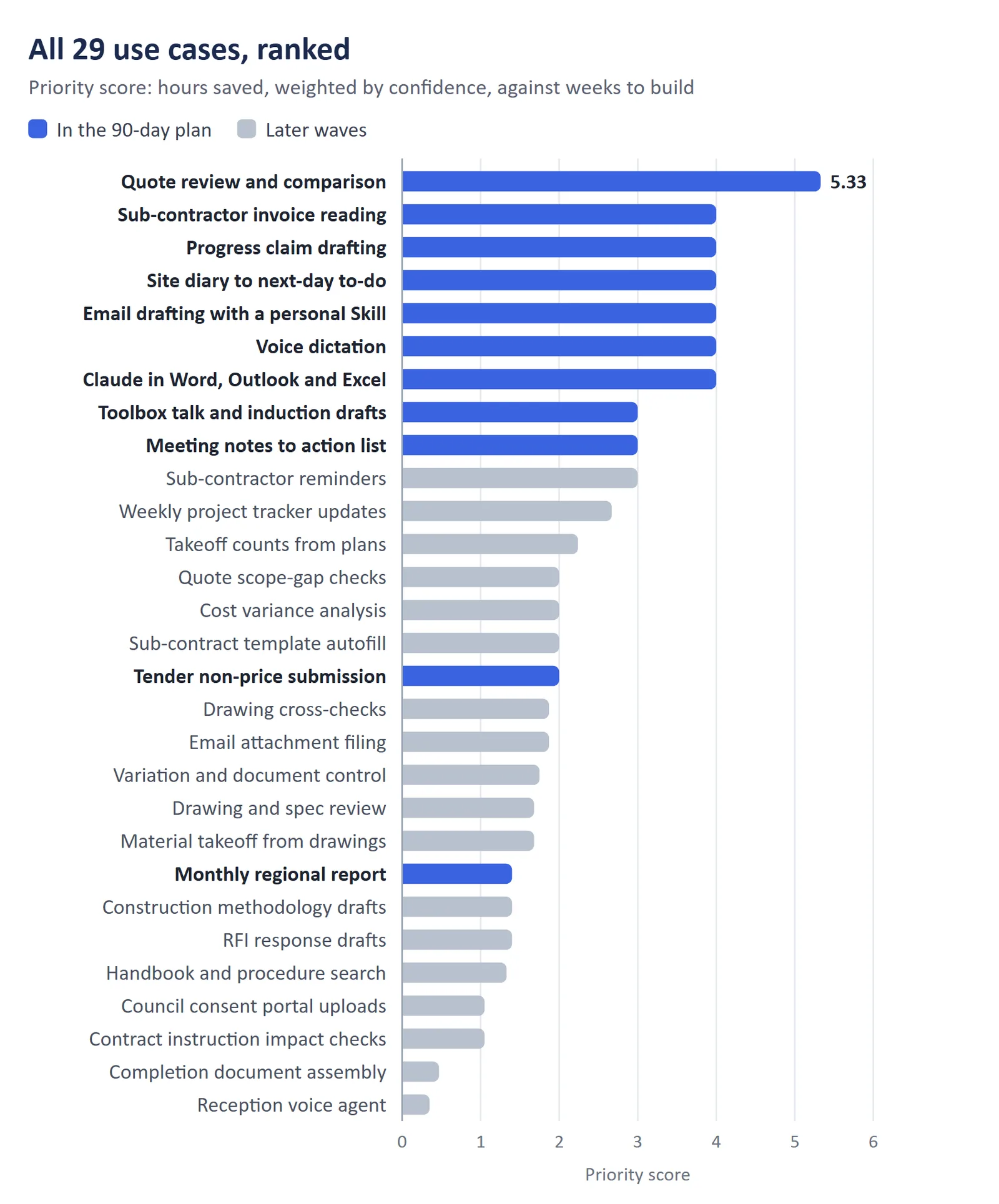
Both days fed one register: 29 use cases across QS, project, site, admin and leadership. Most are admin and document handling: invoices, progress claims, reports and email.
Each use case is scored on hours saved per week, weighted by how sure we are the saving is real, against weeks to build. Quote review came out on top.
A 90-day plan, with the directors deciding
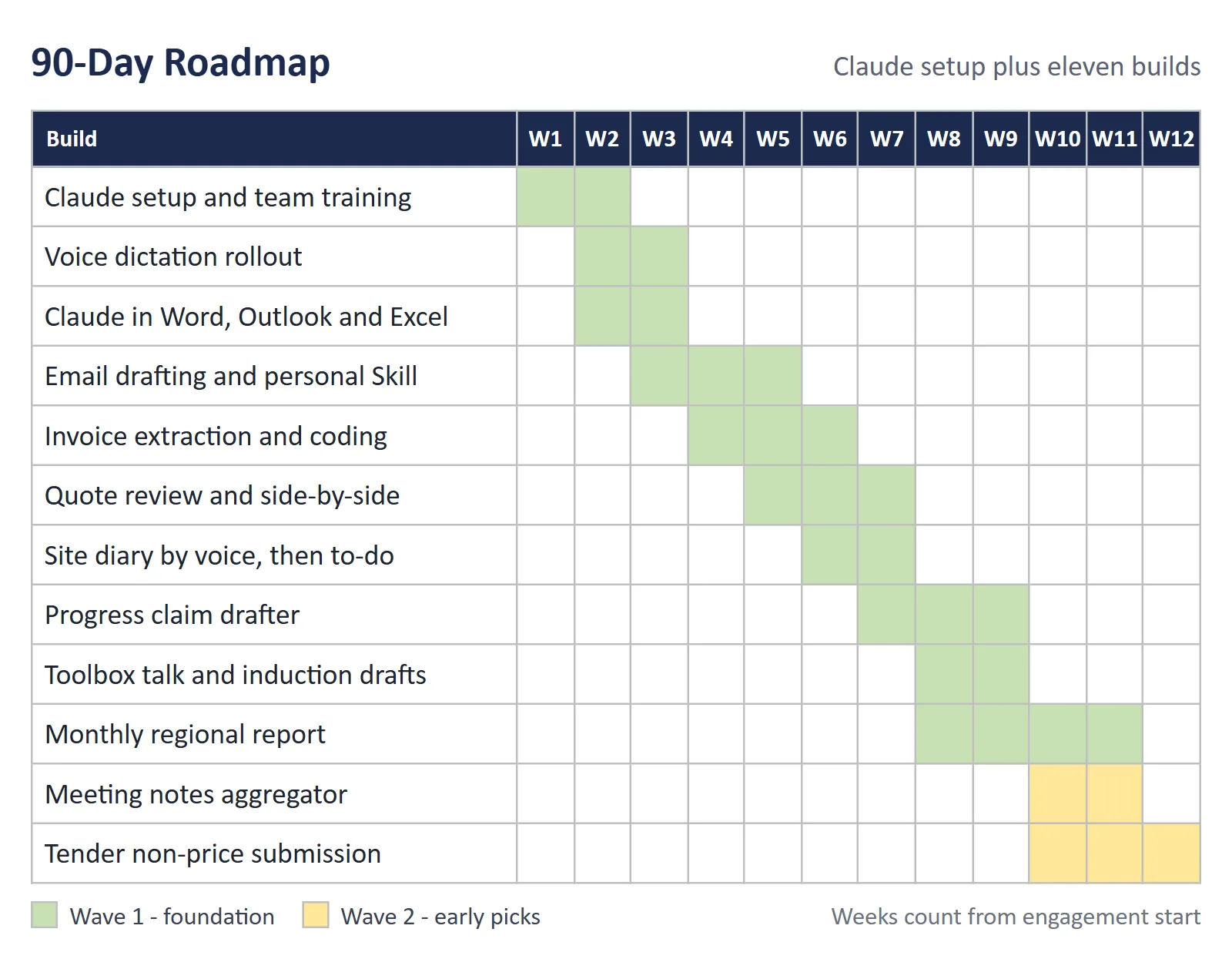
The top of the register became a 90-day plan: Claude setup and team training first, then quick wins like email drafting and voice dictation, then the QS builds.
The directors set the final order. Where staff had already started with Claude, the plan builds on their work instead of replacing it.
Alongside it, the firm got an AI use policy: which tools are approved, what data can go where, and when a person must check the output.
Not sure where AI fits in your business?
We start with the work, not the tools. Your team maps how the week actually runs, tags every step, and you get a ranked list of where AI saves time.
Last updated 20 September 2026