It is 5am at Christchurch Airport and the day ahead is packed. Three client meetings, two presentations at Auckland universities, and a Young Kiwis in AI meetup at ZURU to finish. I filmed the whole thing, and by the end of it one thing stood out more than anything else: the gap between what industry is asking for in AI and what students are actually being taught.
Here is how the day went, and the lessons from it that are worth passing on - especially if you are studying, just graduated, or hiring people who have.
Why I still fly up for face-to-face meetings
First stop was Ming Cheuk, co-founder of ElementX. They have been going since 2013 and built their first chatbot back in 2016, so Ming has watched this whole landscape grow, from the early days right through to everything taking off in 2022. We met on the AI Forum delegation to China, visiting AI and robotics companies behind the scenes (I wrote about that trip in I Spent 7 Days Inside China’s AI Revolution), and we recorded a podcast session while I was there.
A big thing with AI right now is that it pulls everything online and takes away from that personal connection. I think that makes the human, face-to-face stuff worth more, not less. I love travelling, meeting people and keeping in touch with the people I have met, because you never know where those conversations are going to go.
AI search is changing week to week
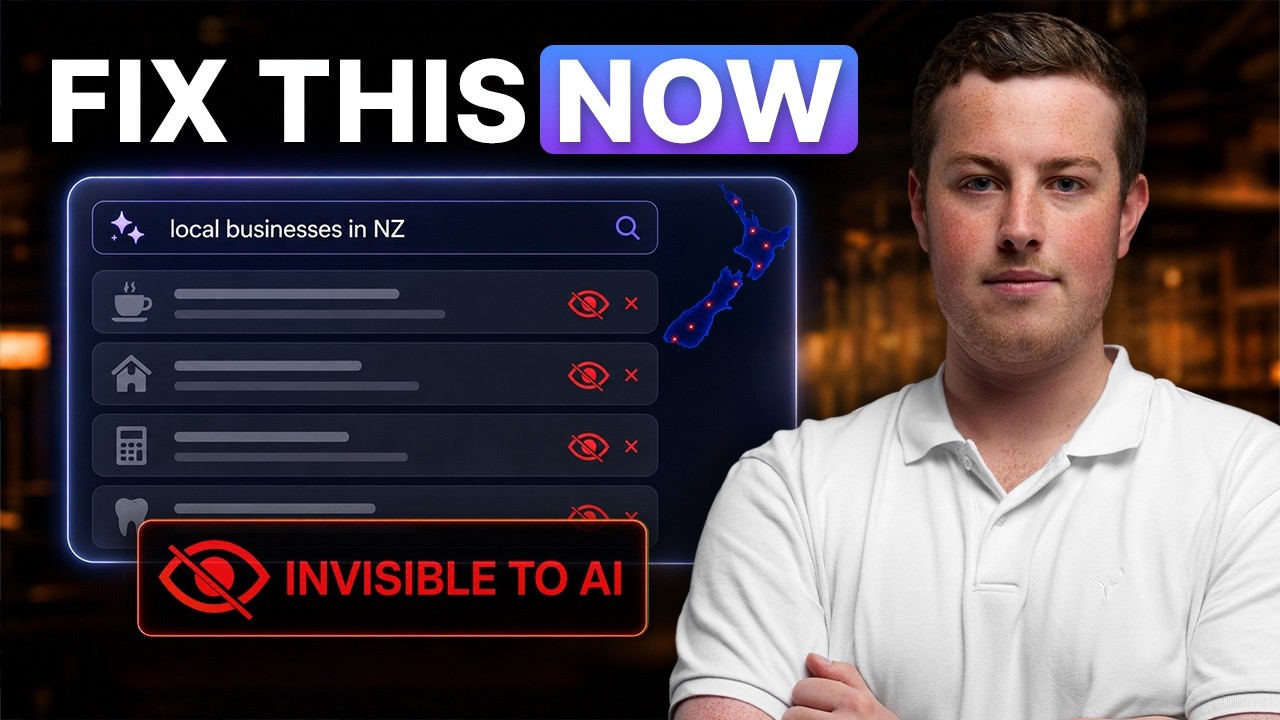
Before we even turned the cameras on, Ming and I were talking about GEO, generative engine optimisation - how your business actually shows up in AI search results. We have put a lot of work into it, and I am now getting a couple of leads a week coming from ChatGPT and other AI sources.
But it moves fast. Reddit has been one of the biggest sources AI tools cite, at around 40% of references, and I recently saw reports that in ChatGPT it had dropped to almost zero within a couple of weeks. Plenty of people selling GEO services are pitching Reddit campaigns. If you are paying good money for one of those and the ground shifts underneath it, that is a problem. The fundamentals still matter - I cover them in How To Rank In AI Search As A Business - but do not bet everything on a single channel.
Graduating into a world of AI: AUT
Next was AUT, speaking to the Computer Science and Engineering Association alongside two other guests: Derrick Edward, co-founder of Harnex AI, and Brodie Dye, a Junior AI Integration Engineer at ZURU. It is good to give back to the generation coming through.
The room was mostly engineers and computer science students, with a PhD student and a Master of Design student in there too. When I asked who was scared, concerned or unsure about AI, plenty of hands went up. When I asked who was confident, hardly any did. That is fair enough. It is a genuinely crazy time to be graduating with how fast the world is moving.
My own pathway
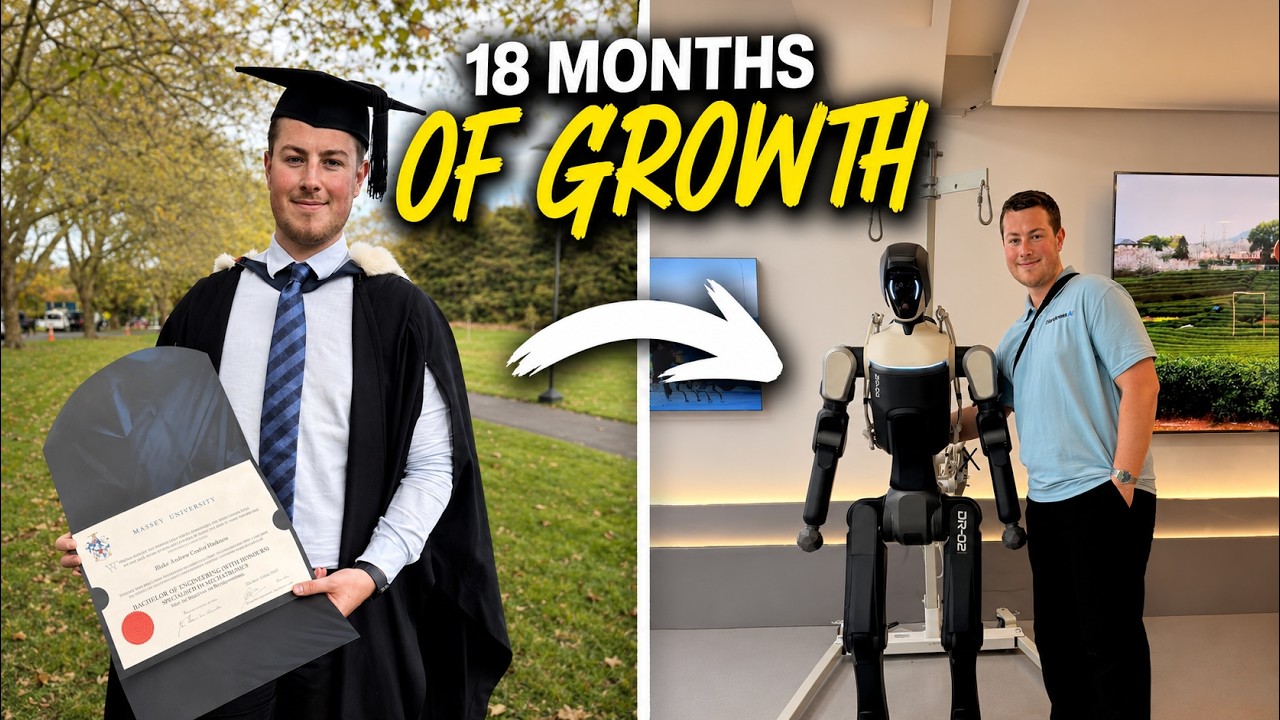
I studied mechatronic engineering at Massey University in Palmerston North. I chose it partly because it was small - there were only 11 of us in our cohort, so we had real access to our lecturers and were practical from day one.
The big moment came in 2022 when ChatGPT launched. Like most students, we put our assignments and exams through it, and it could answer the majority of them better than I could. That was an “oh crap” moment. What am I actually going to do? Where do I go from here? I decided I had to focus on AI, because it was moving that fast.
When the job offers came, one had a single bullet point about AI in the description. I picked that one over the others. It was at MainPower, the lines and electricity distribution company in North Canterbury, and I was pretty much told to “go do AI”. As a graduate, what does that even mean? In practice it meant training staff on Copilot, building Copilot agents for specific knowledge work tasks, and building automations across the business.
No seniors to learn from, so go and find them
In any traditional field you learn from someone senior who can mentor you. University teaches you the fundamentals, but not the business context. With practical generative AI there were no seniors to learn from, because the field was brand new.
So I cold messaged pretty much anyone who had AI in their LinkedIn profile. Most of them ignored me, which is expected. But the conversations I did get were really valuable, and they showed me where businesses were actually using AI. They also taught me something quickly: most people talking about AI online had never actually built anything. A lot of them came from marketing backgrounds selling AI tools, rather than engineers providing real solutions.
YouTube filled the gap. There are plenty of creators teaching you how to build automations in n8n or use Claude properly - practical guidance you will not get at university because it moves too fast, and even most of industry has not caught up. But watching is not enough. What counts is doing: find a problem, build a solution, and be able to talk about the results. That is the part that gets you hired.
The four skills employers hire for in AI
After AUT I headed to the University of Auckland to speak to Master of AI students. A smaller room, same message: there is no opting out. Whatever your degree, AI is going to change how your role works, especially anything manual, tedious or repetitive, text-heavy work, and data analytics.
So what are employers actually hiring for when it comes to automation and generative AI? Notice where the technical skills land.
- Communication. A large language model is trained on text, on natural language. If you are deeply technical but cannot communicate, you cannot use AI very well, because you have to clearly articulate the context, the information and the problem. Then there is the business side: you can build a chatbot or automate a task, but you have to make it relevant to the business, explain it to team leaders, and teach staff how to use it. All of that is communication.
- Problem solving. There are a million ways to solve any problem. The skill is working out the best one, and then communicating it to people.
- Automation. Tools like n8n, Make, Zapier, and Power Automate, which is big in Microsoft organisations.
- Generative AI. Really broad, and it depends on what the business actually needs.
Here is the part students should hear. When we have been hiring for intern and graduate roles, a very basic understanding of automation and generative AI is fine. If you have curiosity, good communication and problem solving, nine times out of ten you will be picked over someone with more AI expertise.
What surprised me at UoA was that many of these students are not being taught how to use AI in software development at all. Master of AI students, not learning to use AI to code. That is kind of crazy.
Where businesses actually are with AI
In the afternoon I ran a Claude session with Captivate Technology. It ended up being one-on-one, which is actually a great format because you get a lot done. We set up email triage, working out priorities, dashboards across projects, and pulling information together from multiple sources. The feedback afterwards was that it would save a lot of time and automate processes that had been bogging things down. (If your team needs the same, that is what Claude setup and training are for.)
Then a catch-up with the team at Zeil about working together on Young Kiwis in AI. A few things from that conversation stuck with me:
- Connected AI is the unlock. Teams that played around with ChatGPT found it was not connected to anything and did not do much for them. Moving to Claude, connecting it to their systems and building skills for their specific tasks is where the real value shows up.
- Candidates already using AI stand out. When hiring even for junior roles, asking which AI tools someone uses is now a real question. A candidate who is already using Claude to plan and execute their work has a big advantage.
- Universities are split. Some lecturers are completely anti-AI, others are very pro-AI, and students are left working out where they sit in between.
90 people at ZURU from one LinkedIn post
Last stop was ZURU, who sponsored both the food and the venue for our Young Kiwis in AI Auckland meetup in their co-working space. Around 90 people turned up, and that came from a single LinkedIn post. That is the power of social media.
We had four speakers: Callum Quin from ZURU, Will Montague-Brown from Caivo, Caitlin Langlands from Zeil on what she is seeing in AI hiring, and me on Young Kiwis in AI. For context on who I am: Harkness AI has worked with over 30 businesses across New Zealand and Australia, I run Young Kiwis in AI with meetups from Auckland down to much smaller crews in Dunedin, and I sit on Engineering New Zealand’s AI advisory group.
Why this is the moment for young people
The reason AI is such a huge opportunity right now is that nobody is an AI expert. You can have a PhD in machine learning and know nothing about generative AI, computer vision, or how an accountancy firm could actually use it. There are so many variations, and the generative side has only been around for about four years.
Traditionally you work your way up from junior to intermediate to senior. Now, from day one, you can know more about this than people senior to you in a business and deliver real value straight away.
The takeaway
It was an insanely busy day, and the thing that stays with me is that gap between how much industry wants these skills and how little many universities are teaching. If you are a student, do not wait for your course to catch up. Build things, talk about what you built, and work on your communication as hard as your technical skills.
And if you want to be in the room with people doing exactly that, we are running the Young Kiwis in AI national conference in Auckland on 12 February 2027. Join the conference waitlist. If you want me to speak to your students or team about this, here is what I cover.