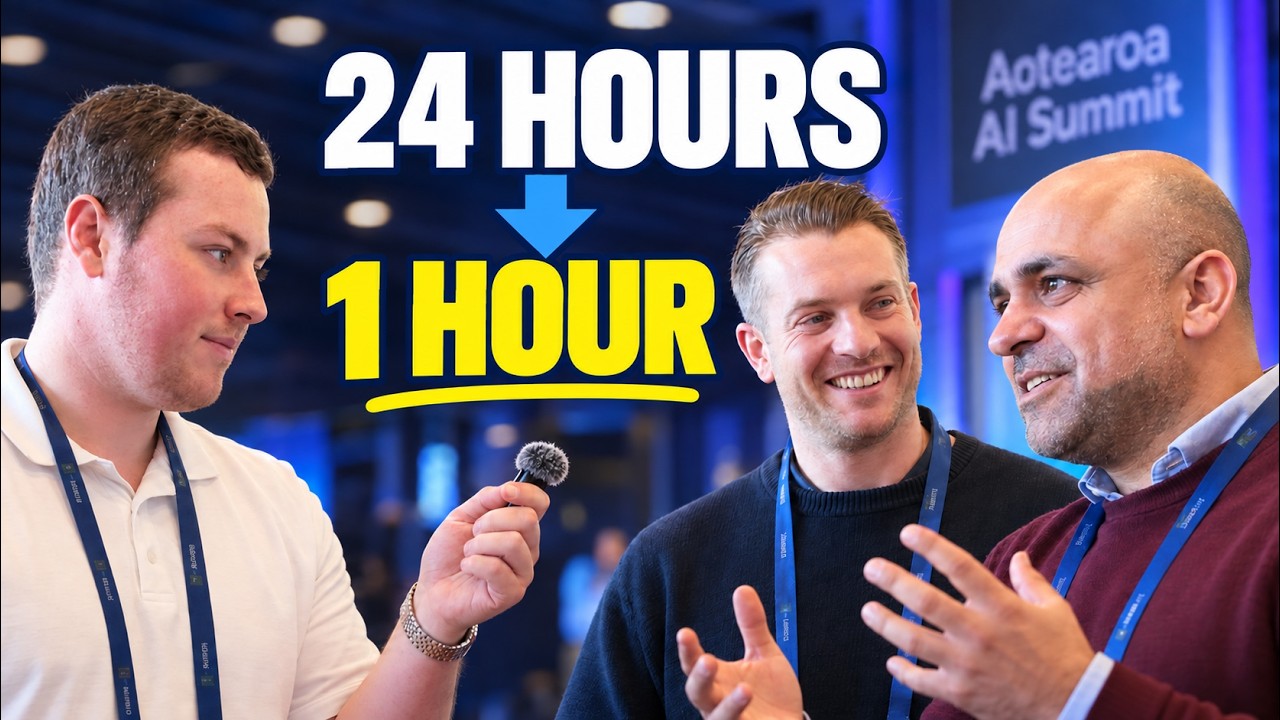
This is a raw one: everything I’m thinking about in AI going into 2027. The rate of progress is non-stop, so here’s where my head is on the business gap, 24/7 AI assistants, jobs, graduates, security, robots and where Harkness AI is heading.
The short version: AI is turning from a chat window into something closer to an employee. The businesses that let their staff experiment early are pulling ahead of the ones that never started. And for the first time, I can genuinely look at some of what AI does and say, “this could take someone’s job.”
How big is the gap between businesses using AI and the rest?
Huge, and most businesses don’t realise it. People who use AI are still a small minority. I talk to business owners and staff every day who have never used a tool like ChatGPT.
The hard part now is the work, and the change in mindset, needed to get those people to where they can get a return from generative AI. The businesses that gave staff licences early - it doesn’t matter if it was Copilot - let people experiment. In the early days most use cases simply didn’t work. Now they do, and those teams have already been through that experimental phase. They’ve been thinking about how AI affects their roles and how it helps.
We’ve had software companies reach out that have never used AI for anything except writing emails. Where do you even start with that journey, and the trust it needs? It’ll be interesting to see how big this gap gets in the next couple of years.
What does an AI implementation package actually include?
The most common thing we offer right now is an implementation package, then ongoing support.
- A short training session. The basics of using AI, an hour or two at most.
- Connecting the tools. If you have Claude or ChatGPT, we connect it to all your software and work through the permissions - what it can read and what it can write.
- Custom connectors. If your software has no ready-made connector, we build one. Here’s how that works.
- Use case mapping and building. We map the use cases like a consultant would, then build them side by side with the team. For example, if they film short-form video, we write a Claude skill so Claude Code can edit it, and go through the whole process with them.
That takes people from prompting AI for a few emails to having it connected to their systems and doing real work.
Where is AI heading next?
Into personalised, 24/7 assistants. The history goes like this:
- Prompts. You ask Claude to write a document, then copy and paste it somewhere.
- Connectors (MCPs). AI can go into your software, read information and make changes. That unlocked the agentic side, where it does multiple tasks across your systems. Only recently has this become plug-and-play for most of the businesses I work with.
- Always-on assistants. Tools like OpenClaw showed what a 24/7 assistant with its own virtual computer could do, but they weren’t easy for the average person to get. Now they’re turning into apps on your phone.
I’ve been using Grok Bot a lot, and it’s probably the biggest upgrade to my AI tool stack in a while. I tried ChatGPT’s version and, for now, it wasn’t useful for me. Claude has just released its own in preview.
This is where AI becomes an employee. Give it a virtual computer and the connections, teach it how you work with skill files, and it’s pretty much like a person sitting there. When an email comes in from a new lead, it can prep for it straight away. My Claude setup can do a lot of this already, but it’s prompt-heavy, and scheduled tasks run hourly or daily. These new assistants can run on triggers, like a new email arriving. There’s more on the setup side in turning Claude into a 24/7 AI employee.
Is AI starting to take jobs?
Up until about the last six months, nothing we were doing in AI made me think “this can take someone’s job”. Now it feels that way a lot.
We’ve seen large overseas companies offer exit packages to a big share of their staff. Compare two businesses: one setting up AI employees, which is what AI always promised and can now deliver, and one still bringing in human labour for everything. The cost difference is huge. You still need humans fact-checking, but how much?
Claude’s “record a skill” feature is a good example. You screen-record yourself doing a task, step by step, and Claude learns it. It has its own computer. The only things missing are judgement and fact-checking.
Look at my own content pipeline. I have an AI clone that speaks and sounds exactly like me - my parents can’t tell it isn’t me. It does video and my animations. It can build a website, join a call and hold a back-and-forth conversation, and it has full computer control. There are very few tasks left that AI can’t do. That gets scary, especially for the next generation.
Should we believe the AI doom or the AI utopia?
Neither, fully. One camp says AI takes us to a world where robots do everything and nobody has to work. The other says AI and robotics will kill us all. I don’t think anyone can be confident about the real answer. It’s worth asking what motives sit behind the people saying these things.
A lot of the “we’re all going to die” talk comes from Silicon Valley, where people are surrounded by others using these models non-stop. Talk to an average person in New Zealand and they may have played around with it. I think New Zealand is in a good spot to sit back and watch what happens. If all you hear is doom, that’s all you’ll know. If all you hear is utopia, same. My general rule: the answer is somewhere in the middle.
What does this mean for students and graduates?
This is the biggest gap I see, and it’s why we started Young Kiwis in AI, a community for young people getting into AI or already working in it. Industry expects graduates to come out with AI skills. Universities mostly leave it to individual lecturers, who either say “AI is cheating”, allow it a little, or teach how to prompt ChatGPT.
Prompting is a good skill, but it mattered most a year and a half ago. Now the valuable skills are recording your screen to teach AI how you work, and connecting it to your software.
I see two types of graduates struggling:
- No AI skills. They did the traditional pathway and avoided AI because it was cheating. But nearly every business now uses some form of AI, so knowing how to use and implement it is valuable.
- Everything is AI. You can tell they haven’t learned the domain knowledge. Their answers are what AI spits out. If you put your boss’s request into AI with no critical thinking on top, why would they hire you? They could do that themselves.
Students need to be careful about when and how they use AI, and clear on their core differentiator - what makes them worth hiring. The old idea that a degree is a piece of paper that guarantees a job isn’t the case any more.
How worried should businesses be about AI and cybersecurity?
We’ve seen a run of AI-related security incidents and outages overseas recently. I think they’ll become more common as models get more advanced. With enough hardware, you can run them non-stop to look for vulnerabilities anywhere.
From the conversations I have, cybersecurity matters to New Zealand companies, but it isn’t a big investment area, especially for smaller businesses. They don’t have big security teams or do much testing. On the flip side, some companies avoid AI completely because they see it as a security threat.
It’s a tool. You can use it for defence, for attack or with malicious intent. You also have to use AI to find your own vulnerabilities. You can never guarantee 100% security on the internet, so the question is to what level. For us, it’s meant more focus on making the projects we put online as secure as possible, and educating people about it.
Why aren’t we talking about robots?
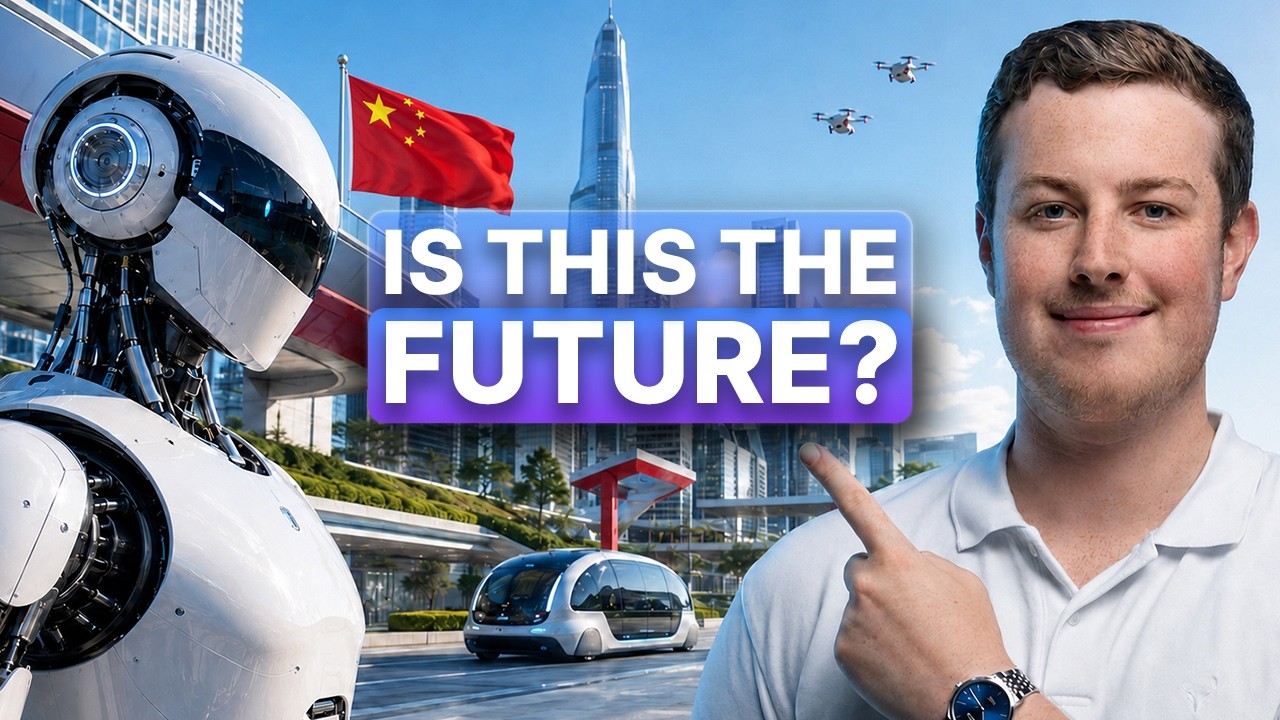
My trip to China with the AI Forum New Zealand was eye-opening. Humanoid robots were walking around. At a FamilyMart, a robot would serve you, grab a drink off the shelf and put your hot dog in the bun. In New Zealand, almost all the conversation is about software - ChatGPT, Claude, Copilot. There’s very little about robotics, especially given how cheap the robots are.
I got a quote of about NZ$40,000 to get a Unitree G1 shipped here, maybe a bit more. Compare that with a salary in the NZ$50,000 to NZ$70,000 range. The catch is training. They come generic: they can walk around and move, but you have to train them on your environment, like stocking shelves at a supermarket. That needs a lot of data, which is why overseas you see companies collecting it, for example cleaners wearing full-body tracking suits and cameras. I studied mechatronic engineering, so I’m keen to get into robotics when there’s the capital to play around with it.
Where is Harkness AI heading?
The strategy stays much the same. We want to be the AI partner for New Zealand businesses, and Australian ones too. AI moves so fast that whatever comes out, we help you implement it, maintain it and train your team.
We started out building SaaS products, custom software and automations. I made the call that it wasn’t worthwhile any more, because AI can produce that work so fast that people can do it themselves. We’re at that stage now. On my existing software projects, clients use Claude to build out their idea and show it to me, and I mainly do the back end and infrastructure. Platforms like Lovable and Bolt do the front end really well now that they connect to Supabase and can write and run the SQL and set up the tables themselves. I’m glad we moved away from that.
The other question is whether to niche into one industry. It’s a hard one. We work across all sorts of businesses, and the results are mixed: some industries take longer but get great results, others are short projects with great results too. For now, staying flexible is working. On the content side, we’ll keep educating people, sharing use cases and seeing where it goes.